
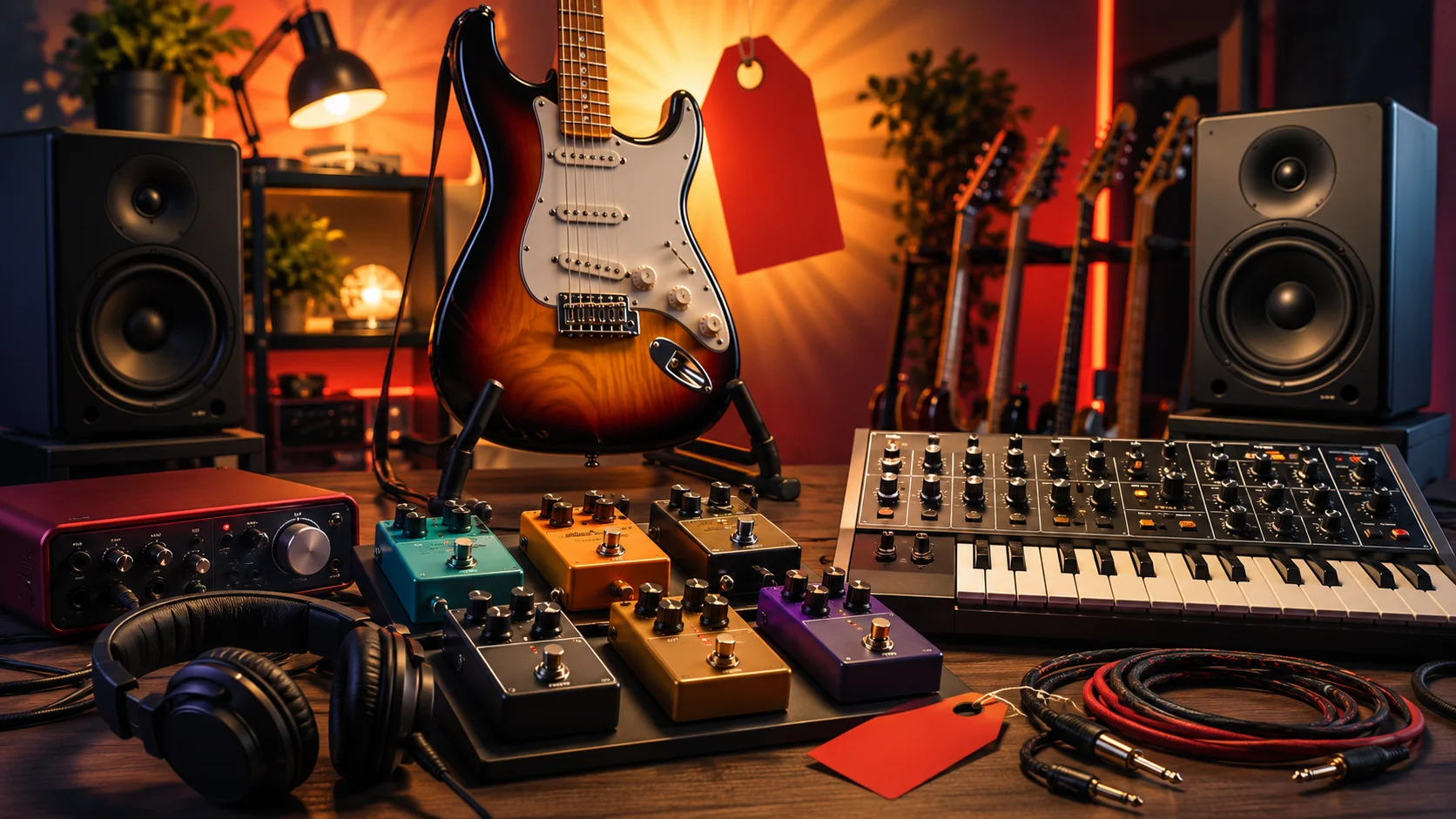
The summer gear hunt has a different kind of electricity when Thomann Music Days starts taking over wishlists, studio chats, and late-night browser tabs. For musicians, producers, DJs, engineers, and bedroom creators, a big seasonal sale is not just about buying something cheaper; it is about finally grabbing the missing piece that makes a setup feel complete. One guitarist sees a discounted pedal and hears a new chorus riff before the box even ships. One producer looks at a studio monitor deal and imagines mixes that finally translate outside the bedroom. That is why Thomann Music Days feels less like a normal retail promo and more like a countdown for anyone who has been waiting to upgrade without wrecking the budget.
The headline is simple: gear is cheaper, but the window does not stay open forever. That urgency is what gives this kind of sale its pulse, especially when popular items can disappear before casual shoppers even make a decision. In music culture, hesitation is almost part of the ritual because every creator knows the drama of comparing specs, watching demos, reading user comments, and then wondering whether the “buy now” button is a smart move or a trap. Still, when a sale covers instruments, studio tools, software, live gear, cables, cases, and accessories, the conversation becomes bigger than discounts. It becomes a snapshot of where modern music making is going and what creators actually need right now.
Why Thomann Music Days Hits Different
What makes Thomann Music Days stand out is the way it lands at a moment when musicians are more budget-aware than ever. The cost of making music has changed because creators are no longer buying only one instrument and calling it a day. A modern setup can include an audio interface, microphones, MIDI controllers, plugins, headphones, backup drives, stands, pedals, synth modules, and enough cables to make a small drawer look like a snake nest. Even if someone plays guitar as their main thing, the line between guitarist, producer, and content creator has become blurry. A sale like this matters because it gives people a chance to build a more flexible creative system without paying full price on every piece.
There is also a cultural reason the sale gets attention. Music gear has become part of online identity, especially on platforms where creators show desk setups, pedalboards, synth walls, drum rooms, and compact travel rigs. People are not just asking whether a piece of equipment works; they are asking whether it fits their workflow, their room, their content style, and their sound. In that environment, gear deals become community events, because everyone starts comparing picks and warning each other about products that might sell out fast. The best part is that the conversation usually goes beyond hype, because musicians are brutally honest when something is overpriced, over-marketed, or secretly brilliant.
For ChordPunch readers, the interesting angle is not simply “cheap gear exists.” The real story is how a sale like Thomann Music Days reveals the pressure points of modern music making. Guitarists want better tone without buying five amps. Producers want cleaner recording chains without turning their rooms into full commercial studios. Singers want microphones that flatter their voice, not just models that look cool in a thumbnail. Live performers want reliable tools that survive rehearsals, transport, sweaty stages, and the occasional chaotic soundcheck. A good sale becomes useful when it helps creators solve those problems instead of just pushing them into random purchases.
The Smart Way to Approach Cheap Gear
The biggest mistake during a major gear sale is treating every discount like a personal invitation. A price cut can make almost anything look tempting, especially when product photos are clean, demo videos sound polished, and the checkout page keeps reminding shoppers that stock may not last. But cheap gear is only truly cheap when it fits a real need. A discounted synth that never gets used is not a win; it is just a decorative regret with knobs. Before jumping into music gear deals, creators should think about what is actually slowing them down in their current workflow.
A guitarist might think they need another overdrive pedal, but the real upgrade could be a better power supply that removes noise from the board. A producer might dream about a new microphone, but the bigger problem could be untreated room reflections that make every vocal sound harsh. A drummer might want new cymbals, while the smarter buy could be better cases, sticks, heads, or recording accessories that make practice and gigging easier. This is where the sale becomes a test of discipline. The best shoppers are not the ones who buy the most; they are the ones who understand their setup well enough to buy the right thing at the right time.
Another smart strategy is separating dream purchases from practical upgrades. Dream purchases are the fun ones, like a guitar you have wanted for years, a boutique-style pedal, a premium controller, or a synth that makes your inner sound designer wake up instantly. Practical upgrades are quieter but often more powerful, such as stands, patch cables, DI boxes, interface expansions, headphones, and monitoring tools. During Thomann Music Days, both categories can make sense, but they should not compete in the same emotional lane. A creator who knows which items are creative luxuries and which items are workflow necessities will make better decisions when the clock is ticking.
Thomann Music Days and the New Gear Mindset
The modern gear mindset is different from the old one because creators now build hybrid setups. A guitarist may record through an amp sim during the week, play through a pedalboard on the weekend, and upload short-form riffs between both. A keyboard player may use hardware synths, software instruments, and a compact MIDI controller depending on the project. A vocalist may need a home recording chain that works for demos, final takes, livestreams, and remote collaborations. This is why Thomann Music Days speaks to more than one type of musician at once.
Instead of thinking about gear as isolated objects, creators are thinking in systems. A guitar is not just a guitar; it interacts with strings, pickups, pedals, amps, interfaces, plugins, monitors, and the room. A microphone is not just a microphone; it depends on the voice, preamp gain, distance, acoustic treatment, pop filtering, and the type of music being recorded. A synth is not just a synth; it can become a bass machine, a texture engine, a live performance tool, or a sample source. When a sale covers multiple categories, it gives creators a chance to improve the connections between those pieces rather than chasing random upgrades.
This shift also explains why gear reviews and music guides matter more during a sale period. Nobody wants to panic-buy a piece of equipment just because a price tag turned red. People want context, comparisons, real-world use cases, and honest talk about what kind of musician will actually benefit. The online creator economy has made shoppers more informed, but also more overwhelmed, because there are endless opinions attached to every product. A good sale strategy filters the noise and focuses on what improves recording quality, playing comfort, creative speed, or live reliability.
Guitars, Pedals, and the Tone Chase
For guitar players, sales like Thomann Music Days always hit a sensitive nerve because the tone chase never really ends. There is always one more pedal that promises a better drive sound, one more delay that feels more spacious, one more guitar that might unlock a new writing style, and one more amp solution that could finally balance volume and feel. The danger is that guitarists can confuse inspiration with accumulation. A new pedal can absolutely spark fresh ideas, but only if it solves a sound problem or opens a direction that the player actually wants to explore. Otherwise, it becomes another box on the floor that gets tested twice and then forgotten.
The best guitar purchases during a major sale are usually the ones that improve consistency. That could mean a reliable tuner, a noise gate for high-gain rigs, an isolated power supply, a compact modeler for travel, or a solid gig bag that protects the instrument properly. Of course, guitars and pedals still have emotional pull, and that is part of the fun. But the most satisfying deal is often the one that makes every session smoother after the excitement fades. When a piece of gear keeps showing up in daily practice, recording, rehearsals, and gigs, the discount becomes more than a lucky price drop.
Studio Gear for Bedroom Producers
Bedroom producers may have the most to gain from music gear deals because small improvements can change the entire creative experience. Better headphones can reveal low-end problems that used to hide in messy mixes. A more stable audio interface can reduce latency, improve recording confidence, and make sessions feel less fragile. A decent microphone can turn rough ideas into release-ready vocals when paired with careful placement and a clean environment. Even a simple MIDI controller can make production feel more physical, which matters when too much music making happens inside a screen.
Still, studio shoppers need to be careful because recording gear has a sneaky way of sounding more magical in marketing copy than it feels in real rooms. A premium mic will not automatically fix a bad room, and expensive monitors will not help much if they sit in a corner with wild reflections. That does not mean upgrades are pointless; it means they should be matched to the weakest link. During Thomann Music Days, a smart producer might prioritize acoustic panels, closed-back headphones, a pop filter, sturdy stands, or software that fills a real gap in the workflow. The result may be less flashy than a shiny new synth, but it can make every future project sound cleaner.
Why Limited-Time Gear Deals Create Real FOMO
FOMO is not always irrational in the gear world, because availability actually matters. Some deals are limited by time, some by stock, and some by the unpredictable reality of popular items moving faster than expected. Musicians who have waited months for a specific instrument or plugin know the pain of seeing a discount vanish right after deciding to “think about it one more day.” That feeling is exactly why Thomann Music Days can turn casual browsing into a strategic mission. The trick is knowing the difference between useful urgency and manufactured panic.
Useful urgency appears when a product is already on your list, the price finally makes sense, and the purchase supports a clear creative goal. Manufactured panic appears when a discount makes you want something you did not care about five minutes earlier. Sale pages are designed to move fast, so the emotional pressure is part of the experience. But musicians can protect themselves by creating a priority list before they shop. If a deal matches the list, it deserves attention; if it only creates sudden excitement, it might be worth skipping.
This is especially important for younger creators who are building their first serious setups. The internet can make it seem like every artist needs a massive desk, glowing rack gear, multiple guitars, and a wall of boutique pedals before making anything worth hearing. That idea is completely backwards. Great music can come from small setups when the creator understands the tools deeply. A sale should help remove friction, not pressure someone into building a studio for an imaginary version of themselves.
How Modern Sound Culture Shapes Gear Choices
The gear people want in 2026 says a lot about where music culture is going. Creators are moving between genres faster than ever, and many of them do not want tools locked into one narrow sound. A guitarist might need clean indie textures, hyper-compressed pop tones, ambient swells, and heavy riffs in the same week. A producer might jump from lo-fi drums to cinematic pads to club-ready bass without changing their entire setup. That flexibility makes Thomann Music Days interesting because the smartest deals are often the ones that support multiple creative identities.
Modern sound culture is also deeply visual. Gear has become part of content, and content has become part of how musicians find audiences. This does not mean the look of a setup matters more than the sound, but it does mean creators often need equipment that performs well on camera, in livestreams, and across social platforms. A compact interface, a clean desk controller, a stylish guitar, or a portable microphone can become part of a creator’s public workflow. That connection between sound and presentation is one reason music gear shopping has become so emotional.
At the same time, the rise of AI tools, virtual instruments, amp modeling, and cloud collaboration has changed the definition of “real gear.” Some musicians still prefer hardware because it feels immediate and tactile. Others are completely comfortable building entire songs with software, samples, and compact controllers. Many creators now live in the middle, using hardware for performance and software for flexibility. A sale that includes both physical and digital tools reflects that hybrid reality, which is why cheap music equipment can mean anything from a pedal to a plugin bundle.
What Creators Should Buy Before Stock Runs Out
The phrase “before stock runs out” can sound dramatic, but it has a practical side. During a big sale, creators should focus first on items that are both useful and easy to underestimate. Cables, stands, adapters, strings, drum heads, picks, power supplies, and cases are not glamorous, yet they are the things that save sessions from falling apart. Every musician has experienced a creative moment ruined by a dead cable, a weak stand, a missing adapter, or a setup that takes too long to assemble. Buying those essentials at a lower price can be one of the smartest moves in the entire sale.
After essentials, the next category is workflow gear. This includes interfaces, controllers, monitors, headphones, pedal switchers, portable recorders, and small mixers. These tools do not always define the sound by themselves, but they shape how quickly and comfortably ideas become finished work. A producer with a better monitoring chain makes decisions faster. A guitarist with a more organized pedalboard spends less time fighting cables and more time playing. A vocalist with a simple, reliable recording setup can capture ideas while the emotion is still fresh.
The final category is inspiration gear, and it should not be dismissed. Inspiration matters because music is emotional before it is technical. A new synth, guitar, microphone, drum machine, or effects pedal can push a creator into a different lane and make old habits feel new again. The key is buying inspiration with intention. If the instrument or tool connects to a real creative direction, then Thomann Music Days can be the perfect moment to grab it before the sale ends.
The Budget Question: Deal or Distraction?
Every musician eventually learns that a discount does not automatically make something affordable. The real cost of gear includes money, space, attention, learning time, and maintenance. A cheap instrument that needs constant setup work may become more expensive emotionally than a slightly pricier one that simply plays well. A plugin bundle with dozens of tools can become overwhelming if the producer only needed one specific processor. This is why the smartest response to Thomann Music Days is not blind excitement, but focused curiosity.
A helpful question is: will this purchase make me create more often, finish more music, sound better, perform more confidently, or solve a recurring problem? If the answer is yes, the deal deserves serious attention. If the answer is vague, the product may be more of a distraction than an upgrade. Musicians are especially vulnerable to distraction because gear research feels productive even when it replaces actual practice or songwriting. A sale should support the creative process, not become a substitute for it.
There is also nothing wrong with skipping a sale entirely if the current setup is working. That might sound strange in an article about Thomann Music Days, but it is true. Sometimes the best move is to use what you already own until the limitations become obvious. Gear should serve the song, the performance, the mix, or the idea. When it does not serve any of those things, even a huge discount can become expensive clutter.
Thomann Music Days as a Snapshot of 2026 Gear Culture
Beyond the shopping angle, Thomann Music Days shows how music gear culture has evolved into a mix of practicality, identity, and experimentation. Musicians are more independent now, but that independence comes with more responsibility. Artists are expected to record themselves, promote themselves, perform live, understand basic production, create content, and keep improving their sound without a giant team behind them. That makes accessible gear more important than ever. When prices drop, the barrier between “I want to try this” and “I can actually build this” becomes smaller.
This matters for emerging artists because the early stages of a music career are often shaped by resourcefulness. A budget microphone can capture the demo that leads to a proper release. A discounted MIDI keyboard can help a guitarist write better arrangements. A small interface can turn a laptop into a serious sketchpad. A pedal bought at the right price can become the signature texture of a song. These stories are not rare; they are the normal, messy, beautiful way modern music gets made.
At the same time, gear culture has become more transparent. Creators talk openly about what works, what breaks, what is overrated, and what secretly punches above its price. That honesty is good for shoppers, especially during big discount events. It pushes people to think beyond brand names and look at real use cases. In that sense, a sale is not just a retail moment; it is a community knowledge test where musicians collectively figure out what is worth the hype.
Final Take: Buy Less Randomly, Create More Often
The best way to understand Thomann Music Days is to see it as an opportunity, not a command. It is a chance to upgrade wisely, fill gaps, protect a setup, explore new sounds, and stretch a music budget further than usual. But the strongest purchases will always be the ones connected to a real creative need. A musician who buys with purpose will get more value from one carefully chosen tool than from five random discounts. That mindset turns a sale from a spending spiral into a smart part of the creative journey.
For guitarists, producers, vocalists, DJs, engineers, and home-studio experimenters, the promise of cheap gear before it sells out is exciting because music making is always partly about possibility. Every new tool suggests a future song, a cleaner mix, a better live show, or a new version of your sound. Still, the gear is only the beginning. The real magic happens after the package arrives, when the browser tabs close, the setup gets plugged in, and the first idea starts moving through speakers. That is when Thomann Music Days stops being a sale and becomes part of the music itself.