
The Teenage Engineering sale is not just another gear discount floating across the internet for a few days and then disappearing into the noise. For a lot of producers, beatmakers, songwriters, and curious bedroom creators, it feels like a rare opening into one of the most stylish corners of modern music tech. Teenage Engineering gear has always had a weird kind of gravity around it, sitting somewhere between serious studio tool, design object, and tiny creative toy that somehow makes people want to finish ideas. When a brand known for premium pricing suddenly drops a notable discount across sought-after devices, the conversation changes from “that looks cool” to “could this actually become my portable studio?” That shift is exactly why this moment matters, especially for musicians who want a compact setup without building a giant desk full of blinking boxes.
Why the Teenage Engineering Sale Feels Bigger Than a Deal
Teenage Engineering has never moved like a normal music gear company, and that is part of the reason people argue about it so much. The brand makes synthesizers, samplers, sequencers, speakers, and odd creative devices that often look more like museum-grade gadgets than traditional studio equipment. Some musicians love that approach because it makes music creation feel playful again, while others think the prices can be hard to justify when cheaper alternatives exist. The current Teenage Engineering sale lands right in the middle of that debate, because it lowers the barrier without removing the brand’s premium aura. Suddenly, the same devices that used to sit in wishlists and YouTube review rabbit holes feel closer to something a small creator might actually buy, use, and build a workflow around.
The timing also matters because music production is in a strange place right now. On one side, laptops are more powerful than ever, plugins are cheaper than ever, and a phone can technically make a complete track from start to finish. On the other side, a lot of musicians are tired of staring at the same screen used for email, invoices, social media, and editing. That is where tiny hardware boxes become interesting again, because they give the creative brain a physical object to touch, learn, and personalize. A discounted Teenage Engineering setup is not only about saving money; it is about buying into a different rhythm of making music, where limitations can feel like a doorway instead of a problem.
The Mini Studio Dream Is Back in Style
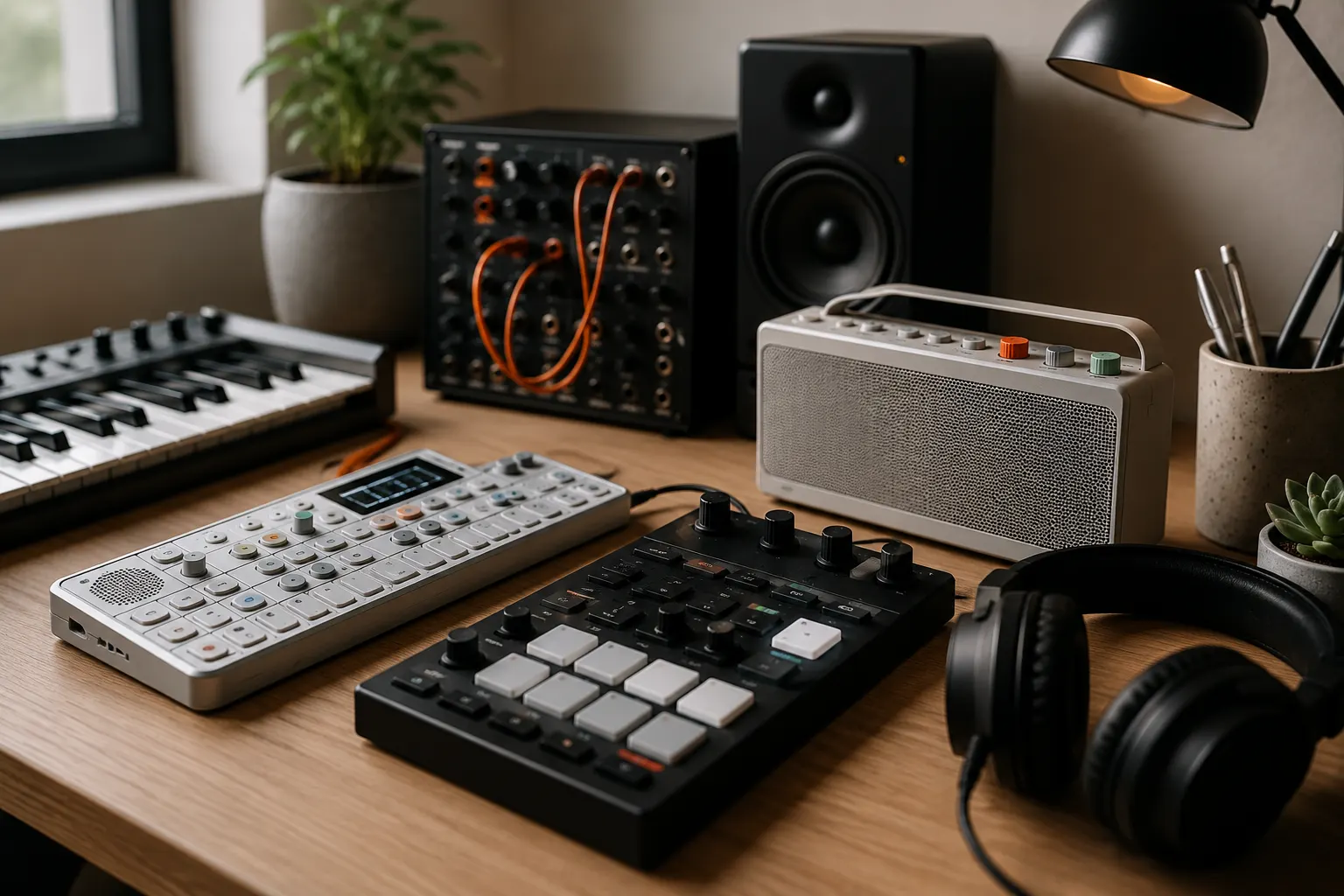
The idea of a “mini studio” used to sound like a compromise, but today it feels more like a lifestyle choice. Producers are no longer locked into one big workstation, one heavy interface, or one fixed corner of a bedroom. They want gear that can move from a desk to a couch, from a backpack to a hotel room, and from a late-night loop session to a real arrangement. Teenage Engineering has been feeding that dream for years by making hardware that looks tiny but encourages complete musical sketches. With the Teenage Engineering sale, that dream becomes easier to imagine because devices like portable samplers and sequencers can form the center of a small but serious creative ecosystem.
What makes the mini studio idea so attractive is not only portability, but also focus. A laptop gives you infinite tracks, infinite plugins, infinite tabs, and infinite excuses to stop making the actual song. A dedicated hardware device gives you buttons, constraints, sounds, and a smaller world that pushes you to make decisions faster. That is why many producers still chase grooveboxes and samplers even when their computers can technically do more. The best small setups do not replace a full studio; they capture ideas before they get over-edited, over-managed, or lost in a folder named “new idea final 7.” In that sense, the Teenage Engineering discount is appealing because it supports a modern workflow where the first spark matters as much as the final mix.
Teenage Engineering Sale and the OP-XY Effect
The OP-XY is one of the biggest reasons this sale has so much attention from gear fans. It sits in that high-end portable workstation lane where design, sequencing, synthesis, sampling, and performance all collide. For many creators, it represents the dream version of a compact brain for a setup: one device that can sketch melodies, shape rhythms, control external gear, and keep ideas moving without forcing the user back to a laptop immediately. The challenge has always been the price, because even people who admire the OP-XY often treat it like a luxury object rather than a casual purchase. When the Teenage Engineering sale cuts that entry point down, the OP-XY becomes less of a fantasy and more of a serious option for producers who want a premium portable command center.
The OP-XY also reflects a bigger shift in how producers think about arrangement. Instead of opening a massive DAW session and building from a blank timeline, the device encourages patterns, sequences, scenes, and performance decisions that feel closer to playing an instrument. That can be refreshing for beatmakers who feel stuck in grid-based editing or endless plugin browsing. It can also appeal to electronic musicians who want something compact enough to carry but deep enough to grow with them over time. The sale does not magically make the OP-XY cheap, but it changes the psychological math, especially for creators comparing it against a collection of controllers, plugins, and smaller boxes that may cost a similar amount once everything is added together.
Why Portable Sequencing Still Matters
Portable sequencing matters because most ideas do not arrive politely when the studio is perfectly prepared. They appear while traveling, during a break, after listening to a song that sparks something, or in that half-awake zone when a melody refuses to leave. A compact sequencer or groovebox gives the musician a place to catch that idea before it dissolves into memory. This is why Teenage Engineering products keep showing up in conversations about modern creativity, even among people who already own powerful computers. The tactile workflow makes the act of building a rhythm or pattern feel immediate, and that immediacy can be the difference between a finished sketch and another forgotten voice memo.
EP-40 Riddim Brings Culture Into the Gear Talk
The EP-40 Riddim is another major reason the sale feels interesting, because it brings a more specific cultural flavor into the Teenage Engineering lineup. Instead of being a neutral sampler with a clean blank-slate identity, it leans into reggae, dub, dancehall, sound system energy, and performance-minded beat creation. That makes it more than just another small box with pads and effects. It becomes a conversation piece about how music gear borrows from culture, how design can celebrate a scene, and how producers respond when a device has a strong personality before they even load a sample. For Chordpunch readers who follow modern gear reviews, that personality is exactly what makes the EP-40 worth discussing beyond specs.
The EP-40 also shows why Teenage Engineering remains polarizing in a useful way. Some users want gear to be open, neutral, and invisible, while others want gear to push them toward a mood immediately. A reggae-inspired sampler will not be for everyone, and that is actually part of its strength. It invites a producer to think about basslines, sirens, delays, rhythm layers, loops, and physical performance instead of treating every beat like a generic template. During a sale, that kind of specialized device becomes easier to justify because it can sit beside a wider setup as a flavor machine rather than needing to be the only production tool someone owns.
A Good Deal Does Not Mean Every Creator Should Buy
The smartest way to look at the Teenage Engineering sale is not to ask whether the gear is finally “worth it” in a universal sense. That question rarely works with music tools because value depends on the way someone actually creates. A producer who loves deep menu diving, huge sound libraries, and traditional mixing workflows might still feel more comfortable with a laptop, controller, and plugin bundle. A beatmaker who wants a playful box for fast ideas may see the sale as the exact moment to jump in. The discount improves the value equation, but it does not erase the need to think honestly about workflow, patience, learning style, and whether a small device will become a daily instrument or a beautiful object collecting dust.
This is where the hype can become dangerous if creators only chase the aesthetic. Teenage Engineering products photograph beautifully, and that visual identity can make them feel like instant creativity upgrades. However, no hardware box can replace taste, practice, arrangement skills, or the boring discipline of finishing songs. The real question is whether the device helps someone start faster, stay engaged longer, and make choices with more confidence. If the answer is yes, the sale is meaningful; if the answer is no, even a discounted box can become another expensive distraction in a room full of unfinished ideas.
How to Know If the Sale Fits Your Workflow
A producer should begin by looking at their current creative bottleneck. If the problem is that ideas never get recorded quickly, a compact sampler or sequencer could genuinely help. If the problem is mixing, mastering, vocal recording, or acoustic treatment, a stylish portable box may not solve the real issue. It also helps to think about whether the device will be used alone or connected to other gear, because Teenage Engineering products often shine when they become part of a small ecosystem. The best purchase is not always the most powerful machine on paper; it is the one that makes someone want to create again after a long day, even when the laptop feels like work.
The Rise of Deskless Music Production
One reason this sale is resonating is the rise of deskless music production. A growing number of creators are building tracks outside the traditional studio environment, whether that means making beats on a train, arranging loops in a living room, or sketching demos while traveling. The old image of a studio as a fixed room with monitors, racks, and a chair in the perfect triangle still matters, but it is no longer the only serious path. Portable music hardware gives producers permission to treat creativity as something that can move with them. In that landscape, Teenage Engineering’s compact devices feel especially current because they match the way younger creators already live, work, and document their creative process.
This deskless movement also connects with modern sound culture, where the process is often part of the story. People do not just want to hear the final beat; they want to see the setup, the workflow, the strange little machine, and the moment a loop becomes a track. That visibility has made hardware more emotionally valuable, because a device can become part of a creator’s identity. Teenage Engineering understands this better than most companies, which is why its gear often spreads through videos, photos, and studio tours as much as traditional reviews. The Teenage Engineering sale taps into that culture by making aspirational tools feel slightly more reachable at a time when producers are rethinking what a studio can be.
Design Is Part of the Instrument
It is impossible to discuss Teenage Engineering without talking about design, because the design is not just decoration. The buttons, labels, colors, screens, shapes, and overall physical language influence how people approach the device. Some musicians dismiss that as surface-level branding, but anyone who has made music for years knows that inspiration is not always rational. A guitar that feels good makes you play differently, a keyboard with the right resistance changes your phrasing, and a sampler that invites touch can change how quickly you build an idea. Teenage Engineering’s strongest products understand that the emotional relationship between creator and object can shape the music before any technical feature enters the conversation.
That does not mean design should excuse weak functionality, and this is where buyers need to stay grounded. A beautiful device still needs to earn its place through sound, workflow, reliability, and long-term usefulness. But in an era when so many tools live inside flat screens, a distinctive piece of hardware can help music feel physical again. That is especially important for creators who spend the whole day online and want their music practice to feel separate from regular digital life. The sale makes this design-first philosophy more approachable, allowing more musicians to test whether the Teenage Engineering experience is genuinely useful for them or simply visually attractive from a distance.
Where the Deal Fits in Modern Sound Culture
Modern sound culture is full of contradictions, and this deal sits right inside them. Music is more accessible than ever, yet creators still crave rare objects that make their process feel personal. Software can imitate almost anything, yet hardware continues to sell because people want friction, touch, and limitation. Social platforms reward speed and visuals, yet serious musicians still need tools that help them go deeper than a fifteen-second loop. The Teenage Engineering sale becomes interesting because it is not only about discounted gear; it reflects a culture where artists want compact setups that look good, move easily, and still feel capable enough to make real music.
There is also a generational element at play. Younger producers often learn music through a messy mix of tutorials, short-form videos, Discord conversations, sample packs, and hands-on experimentation. They may not care about traditional studio rules in the same way older engineers did, but they still care deeply about sound, vibe, and identity. A small Teenage Engineering setup fits that mindset because it feels open-ended without looking intimidating. For readers following music production guides, the lesson is clear: the best modern studio is not always the biggest one, but the one that helps a creator return to the idea again and again.
The Hidden Cost of Cheap Creative Tools
A sale can make premium gear more tempting, but it also raises a bigger question about how creators spend money. Cheap tools are everywhere, and many of them are excellent, especially in software. A producer can buy affordable plugins, free sample packs, used MIDI controllers, and budget headphones while still making strong music. However, the hidden cost of cheap tools is that they can multiply until the setup becomes overwhelming. Sometimes one focused device that feels inspiring can be more valuable than twenty bargain purchases that never become part of a stable workflow.
This is why the Teenage Engineering discount should be judged against habits, not just price tags. If a creator already owns too much gear and struggles to finish songs, another box may not be the answer. If a creator has been waiting for one portable centerpiece to build around, the sale could be genuinely useful. The goal is not to worship expensive design or reject affordable alternatives. The goal is to choose tools that reduce friction, support finished work, and make music feel exciting enough to keep returning to when the first wave of new-gear energy fades.
What Beginners Should Understand Before Buying
Beginners looking at the Teenage Engineering sale should remember that hardware has a learning curve, even when it looks playful. A compact device can seem simple from the outside, but learning shortcuts, modes, sampling behavior, sequencing logic, and file management takes patience. That is not a bad thing, because learning an instrument is part of building a personal sound. Still, beginners should avoid expecting instant professional tracks just because the machine looks inspiring. A better expectation is that the device will become a creative sketchpad, a rhythm playground, or a portable idea lab that gets more powerful as the user builds muscle memory.
New producers should also think about what else they need around the device. Headphones, cables, a way to record into a computer, storage habits, and a basic understanding of arrangement all matter. The smallest studio still needs a practical workflow for saving, exporting, and finishing ideas. This is where many beginners get stuck, because the fun part is making loops and the harder part is turning those loops into songs. A Teenage Engineering device can make the fun part more immediate, but the owner still needs a plan for moving ideas from sketch to finished track.
Why This Sale Could Shape Buying Habits
The sale could also influence how musicians think about premium gear more broadly. When a brand like Teenage Engineering offers a major discount, it creates a waiting-game mentality around products that once felt resistant to normal deal culture. Buyers may become more patient, more strategic, and more willing to watch seasonal promotions before paying full price. That shift can put pressure on other boutique and design-heavy gear companies, especially as musicians become more careful with spending. It also shows that even highly desirable gear exists inside a real market, where timing, bundles, discounts, and community discussion can shape demand.
At the same time, the sale can strengthen the brand’s reach by pulling in users who were previously curious but hesitant. Once a creator enters the Teenage Engineering ecosystem, they may become more likely to explore related devices, accessories, updates, and workflows. That is why sales are not only short-term revenue events; they can reshape communities. A wave of new users means more tutorials, more jams, more troubleshooting, more patches, and more conversation. For a brand built around both tools and culture, that kind of momentum can be just as important as the discount itself.
Final Thoughts on the Teenage Engineering Sale
The Teenage Engineering sale matters because it arrives at the perfect intersection of gear desire, portable creativity, and modern music culture. It gives producers a reason to reconsider devices that may have felt too expensive, too niche, or too design-driven at full price. It also highlights a bigger truth about music production in 2026: the studio is no longer one room, one screen, or one fixed workflow. For some creators, a mini setup built around a compact sampler, sequencer, or performance device can be enough to restart momentum and make music feel alive again. The discount does not make every purchase automatically smart, but it does make the conversation more realistic for people who have been waiting for a small studio that feels inspiring instead of intimidating.
In the end, the best reason to care about this sale is not the percentage off, the hype, or the clean product photos. The best reason is the possibility that a smaller tool can help someone create more often, finish more ideas, and enjoy the process without needing a massive setup. Teenage Engineering gear will always spark debate because it mixes function, design, price, and personality in a way that refuses to be boring. That debate is healthy, because it pushes musicians to ask what they actually need from their tools. If the answer is focus, portability, tactile play, and a little bit of creative weirdness, this Teenage Engineering sale might be the rare gear moment that genuinely makes a mini studio feel within reach.