

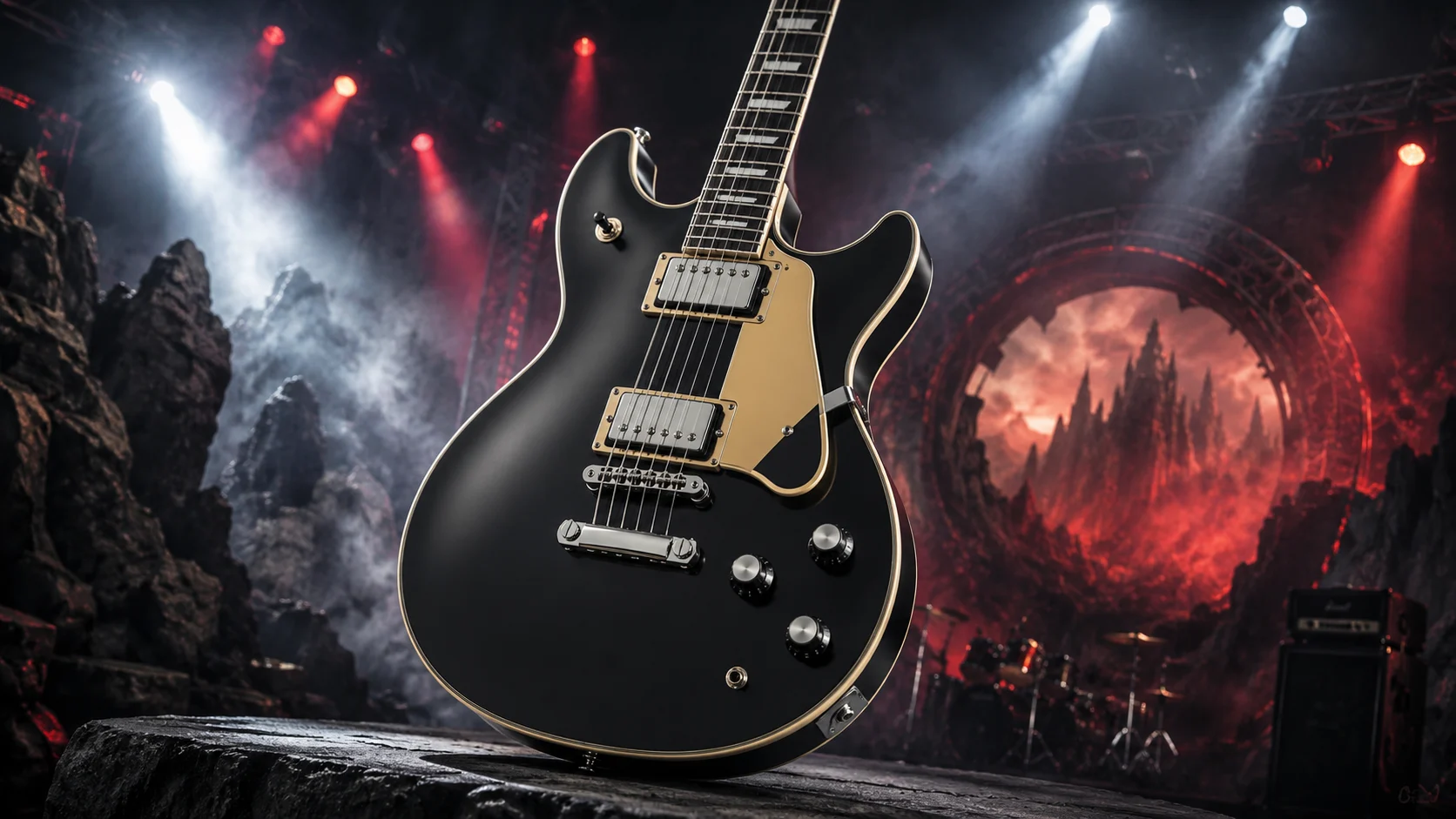
The phrase Gretsch Streamliner CVT does not sound like the opening line of a metal story at first, and that is exactly why this guitar is interesting. Gretsch has always carried a certain vintage glow, the kind of brand language that makes people think of rockabilly sparkle, smoky hollow bodies, old-school stage lights, and players who care about style as much as sound. Yet the new Streamliner CVT walks into the room with a much sharper attitude, aiming at guitarists who want a cheap, stripped-down, riff-ready machine without the usual boutique price drama. It feels like one of those gear moments where a legacy brand suddenly realizes younger players are not waiting around for permission to make heavy music on “the correct” guitar. That tension between classic Gretsch identity and modern metal practicality is what makes this release feel bigger than just another affordable electric guitar.
Why the Gretsch Streamliner CVT Feels Different
The Gretsch Streamliner CVT lands in a part of the guitar market that has become brutally competitive, because budget players today are smarter, louder, and less patient than ever. A cheap guitar cannot simply look cool anymore; it has to survive home recording, bedroom shredding, live rehearsals, alternate tunings, pedal chains, and social media demos where every flaw gets exposed in seconds. That is why the CVT feels like a calculated move rather than a random budget drop, because it takes a familiar Gretsch silhouette and cuts away anything that might make the instrument feel too precious. The result is a double-cut solidbody-style guitar with a no-nonsense personality, built for people who want to plug in, add gain, and immediately find out whether the thing can move air. In a market full of safe Strat copies, Les Paul-inspired workhorses, and metal guitars dressed in aggressive shapes, the CVT stands out by being weirdly classic and unexpectedly heavy at the same time.
The most interesting part is not just that Gretsch made a cheaper CVT, but that the company seems aware of how guitar culture has shifted. Younger players are not always chasing the same hero tones their parents did, and many of them do not separate genres with the same hard borders older gear communities still love to argue about. A guitar can look retro, run through a modern high-gain amp sim, sit inside a shoegaze wall, and still deliver chunky metal rhythm parts without anyone calling the tone police. That is the cultural lane where the budget metal guitar conversation now lives, and the Streamliner CVT slides right into it. It does not try to be the most extreme guitar on the wall, which may actually make it more useful for players who want one affordable instrument that can travel between styles without looking like it only belongs to one scene.
A Cheap Guitar for Metal Without the Usual Costume
For years, the phrase cheap guitar for metal usually pointed toward a very specific visual language: sharp horns, black hardware, active-style aggression, thin necks, and body shapes designed to look fast even before anyone played a note. There is nothing wrong with that world, and plenty of those guitars are excellent tools, but not every metal player wants to look like they walked out of the same catalog. The Gretsch Streamliner CVT takes a different route by using a double-cut design that feels more garage-rock, punk, and classic alternative than traditional metalcore or shred. That contrast is important, because modern heavy music has become more visually fluid, with players mixing vintage amps, digital rigs, baritone guitars, offset bodies, and minimalist stage aesthetics. In that context, a Gretsch-style double-cut that can handle gain is not a contradiction anymore; it is a very current answer to a scene that likes its gear with personality.
Price also matters here, because affordable instruments have become the real testing ground for the future of guitar. A $249 guitar, when built with the right priorities, can become someone’s first serious instrument, a backup stage guitar, a mod platform, or the weird extra tool that unlocks new songwriting habits. That price point lowers the emotional risk, which means players may be more willing to experiment with tunings, pickup swaps, heavier strings, or unusual pedal settings. For metal players especially, affordability matters because the rest of the rig can already eat money fast through amp modelers, interfaces, pedals, plugins, cases, straps, cables, and recording software. A guitar like the Streamliner CVT therefore does not need to feel luxurious to matter; it needs to feel playable, direct, and inspiring enough that a riff shows up before the buyer starts thinking about upgrades.
The CVT Shape Has More Edge Than Expected
The CVT shape has always carried a cult flavor, partly because it does not sit neatly inside the most obvious guitar categories. It has a little SG-like energy, a little retro utility, a little garage-band awkwardness, and enough Gretsch DNA to avoid feeling generic. That matters because the guitar world is full of budget instruments that play fine but disappear visually the moment they leave the product page. The Gretsch Streamliner CVT has a body outline that gives it identity before a single chord rings out, and that kind of identity can be surprisingly important for young players building a sound and image at the same time. When a guitar looks like it belongs to someone with taste rather than someone who just sorted by lowest price, it becomes easier to bond with it.
The double-cut design also makes practical sense for heavier playing, even if the aesthetic is not obviously “metal” in the old-school sense. Upper fret access matters when players move from chunky rhythm riffs into higher-register leads, dissonant intervals, octave lines, or noisy post-hardcore textures. A comfortable body shape can help a guitarist stay relaxed during long writing sessions, especially when they are switching between palm-muted patterns and more melodic parts. The CVT’s stripped-down layout also helps keep the experience focused, because there is less visual clutter and less psychological friction between picking it up and actually playing. In a world where too much gear can turn into too many choices, a simple guitar with a strong outline can feel surprisingly modern.
Gretsch Streamliner CVT and the Modern Metal Tone
The big question is whether the Gretsch Streamliner CVT can actually make sense for modern metal tone, because style alone cannot carry a guitar once the gain comes up. Metal players need clarity, attack, tuning confidence, and pickups that do not instantly collapse into mud when the amp gets saturated. The CVT is positioned around a humbucker-loaded, rock-friendly setup, which is the right foundation for heavier tones because humbuckers naturally bring more output, body, and noise control than many traditional single-coil designs. That does not mean every player will find it perfect for extreme metal straight out of the box, but it does mean the guitar is starting from a place that makes heavy music realistic. For players working in hard rock, punk, grunge, doom, alternative metal, post-hardcore, or classic metal, that foundation is more than enough to begin building a serious sound.
Modern metal tone is not only about raw output anymore, and that is where a guitar like this becomes more interesting. A lot of today’s heavy recordings depend on tight editing, layered rhythm tracks, amp plugins, impulse responses, and carefully shaped low end, so the guitar itself needs to provide a clear signal rather than an overly hyped one. Sometimes a slightly less extreme instrument actually records better because it leaves space for the amp, cabinet simulation, bass guitar, and mix processing to do their jobs. The Streamliner CVT’s appeal is that it seems built around straightforward energy rather than exaggerated specs, which can help players avoid the trap of buying a guitar that sounds huge alone but messy in a track. For guitarists who write at home and think in terms of full arrangements, that balance can matter more than marketing buzzwords.
Why Humbuckers Still Matter for Heavy Players
Humbuckers remain central to heavy guitar because they solve several problems at once, especially for players using high gain. They reduce the hum that can become unbearable when distortion, compression, and boosts are stacked together, and they deliver a thicker voice that helps rhythm parts feel grounded. In a guitar like the Gretsch Streamliner CVT, that matters because the entire concept depends on taking a retro-coded body and giving it enough muscle to survive modern rigs. A good humbucker platform can also respond well to pedals, whether the player is using a classic overdrive in front of an amp or a completely digital setup through an audio interface. That flexibility is why the CVT should not be judged only by old Gretsch stereotypes, because the pickup format pushes it into a much broader sonic lane.
For metal, the bridge pickup is usually where the first impression happens, because that position needs to produce tight palm mutes, clear power chords, and enough bite for riffs to cut through. If the bridge sound feels too soft, too dark, or too loose, players quickly lose confidence, especially when using lower tunings. The CVT’s rock-focused personality gives it a better chance at satisfying that first test, even if pickup taste will always be personal. Some players may eventually upgrade the electronics for more output or a more surgical modern tone, but that is normal in this price range and should not be treated like a failure. In fact, an affordable guitar with a solid body, comfortable neck, and usable stock pickups can be a perfect platform for future customization.
Where It Fits in the Budget Gear Boom
The budget guitar boom has changed expectations across the entire industry, and the Gretsch Streamliner CVT is arriving at exactly the right moment. Players now expect affordable instruments to be more than starter gear, because online communities have proven again and again that low-cost guitars can sound shockingly good with the right setup. Better factory consistency, improved overseas manufacturing, and a more informed buyer base have all pushed brands to take entry-level instruments more seriously. The old idea that a cheap guitar is automatically disposable feels outdated, especially when so many working musicians use budget instruments on stage and in studios without apology. This is why Chordpunch-style gear reviews have become more important, because players want real-world context rather than luxury hype.
The CVT also speaks to a generation that learned guitar through YouTube demos, TikTok riffs, amp plugins, and bedroom recording setups rather than only through traditional local scenes. For these players, a guitar’s value is measured by how quickly it becomes useful inside a creative workflow. Can it track clean double parts without fighting tuning? Can it handle a drop tuning for a riff idea at midnight? Can it look cool enough on camera without needing a thousand-dollar brand flex? Can it survive being the guitar that gets grabbed every day because it feels easy rather than intimidating? Those are the questions that define modern budget gear culture, and they are much more practical than the old forum arguments about whether a guitar is “real” enough.
A Gretsch for Players Who Do Not Play Gretsch
One of the smartest things about the Gretsch Streamliner CVT is that it may appeal to people who never planned to buy a Gretsch. That is a big deal, because Gretsch has a strong identity, but strong identities can become narrow in the minds of casual buyers. Some players still associate the brand mainly with hollow bodies, Bigsby vibratos, jangly cleans, country twang, and vintage rock swagger. The CVT does not erase that heritage, but it offers a side door into the brand for guitarists whose daily vocabulary includes distortion, downstrokes, noise, fuzz, and heavy rhythm work. In other words, it lets Gretsch participate in a louder conversation without pretending to become an entirely different company.
That matters because guitar brands survive by balancing memory and momentum. If a company leans too hard on history, it becomes a museum piece for players who already know the story. If it chases every trend too aggressively, it risks losing the identity that made people care in the first place. The Streamliner CVT feels like a healthier middle path, because it keeps enough Gretsch flavor to feel distinct while simplifying the formula for modern, price-conscious players. It is not trying to out-metal the most aggressive superstrats, and that restraint may be its secret advantage. Instead of competing on intimidation, it competes on character, affordability, and the promise that heavy music can come from unexpected shapes.
The Mod Platform Question
Affordable guitars often live two lives: the guitar they are on day one, and the guitar they become after a player starts modifying them. The Gretsch Streamliner CVT looks like the kind of instrument that could attract both groups, because some buyers will want a cheap riff machine as-is while others will see a blank canvas. A pickup swap could push it deeper into modern metal, locking tuners could improve confidence for aggressive players, and heavier strings could make lower tunings feel more stable. At the same time, part of the charm of a budget guitar is learning what it can do before changing anything. The smartest move is probably to play it hard first, understand its personality, and only upgrade the parts that genuinely limit the music.
The mod platform angle is especially relevant because many guitarists now treat affordable instruments as creative projects rather than compromises. A player might buy the CVT for the shape, then slowly turn it into a personalized stage tool over several months. That process creates attachment, because every upgrade reflects a real need instead of a fantasy spec sheet. It also makes financial sense for players who cannot drop a large amount of money at once but can improve an instrument piece by piece. In that way, the Streamliner CVT fits the modern DIY mindset, where gear is not just purchased but gradually shaped around a player’s actual habits.
Metal Is Broader Than the Guitar Aisle Admits
The reaction around a guitar like this also exposes something funny about metal culture: the sound has always been more flexible than the marketing. Heavy music has been made on all kinds of instruments, from pawnshop oddities to vintage offsets, hollow bodies, baritones, extended-range guitars, and battered student models. The idea that metal belongs only to one family of guitar shapes was always more retail shorthand than creative truth. The Gretsch Streamliner CVT reminds players that heaviness is built through touch, tuning, arrangement, amplification, and attitude, not only through a sharp headstock or a premium pickup set. That message feels especially relevant now, when modern sound culture is less interested in purity and more interested in results.
This wider view of metal also connects with the way younger musicians mix genres. A guitarist might write a doom riff in the morning, record indie cleans in the afternoon, and build a noisy industrial loop at night. They may not want three different guitars for those moods, especially if they are working in a small room with a limited budget. A guitar that can move between rock, metal, punk, alternative, and experimental textures becomes more valuable than a specialist tool that only shines in one narrow context. The CVT’s real strength may be that it does not demand a single identity from the player, which is exactly how many modern musicians prefer to create.
The Sound Culture Around Affordable Gear
The rise of affordable gear has created a more democratic sound culture, and the Gretsch Streamliner CVT is part of that larger shift. In the past, expensive instruments often carried an aura of legitimacy, as if better music automatically lived behind a higher price tag. Today, that idea feels weaker because listeners discover songs through headphones, playlists, short videos, bedroom performances, and independent releases where the gear budget is invisible. What matters is whether the part hits emotionally, whether the riff has weight, and whether the track feels alive. A cheap guitar that helps someone finish a song is more culturally important than an expensive guitar that stays untouched in a case.
This is also why budget guitars have become content magnets in the modern music ecosystem. Players love watching someone test whether an affordable instrument can survive brutal tones, clean passages, fuzz pedals, drop tunings, and direct recording chains. There is a natural suspense in asking whether a low-cost guitar can embarrass more expensive options, and that suspense makes instruments like the CVT perfect for today’s gear conversation. But beyond the entertainment value, there is a serious point: affordability expands access, and access creates more musicians. When a recognizable brand puts out a guitar that looks cool, costs less, and speaks to heavier players, it potentially gives more people a reason to start writing.
Who Should Actually Buy This Guitar?
The Gretsch Streamliner CVT makes the most sense for players who want a low-cost electric guitar with personality, especially if they live somewhere between rock and metal. It is easy to imagine a beginner choosing it because it looks cooler than the usual starter options, but it is just as easy to imagine an experienced player grabbing one as a backup or mod project. Punk players may appreciate the simplicity, doom players may enjoy the chunky feel through fuzz, and alternative metal players may like that it does not look like every other guitar in the genre. It could also work for producers who keep guitars around the studio for texture, because a distinct-looking, humbucker-loaded double-cut can inspire parts that a more familiar guitar might not. The ideal buyer is not necessarily a shred purist; it is someone who wants a practical riff tool with a little visual mischief.
There are still reasons some players may look elsewhere, and a fair article has to admit that. If someone needs ultra-tight extended-range performance, premium hardware, active pickups, or flawless touring-grade stability right out of the box, this guitar may not be the final answer. If someone wants the most traditional Gretsch clean tone, they might also prefer a different model from the broader lineup. But if the goal is affordable heaviness, everyday playability, and a guitar that feels different from the usual budget metal crowd, the CVT becomes easy to understand. It is not supposed to replace every guitar in the room; it is supposed to make players rethink what kind of instrument can start a heavy song.
How to Approach the First Setup
Any affordable guitar deserves a proper setup before players judge it too harshly, and the Gretsch Streamliner CVT should be treated the same way. A good setup can transform the feel of a budget instrument, especially when adjusting action, neck relief, intonation, pickup height, and string gauge for the player’s actual style. Metal players in particular should think carefully about strings, because heavier gauges can improve tension for lower tunings and make palm-muted riffs feel more controlled. Pickup height is another underrated detail, since moving pickups too close to the strings can create harshness while setting them too low can reduce attack. Before buying replacement parts, players should give the guitar a fair chance with careful adjustments, because many budget instruments sound much better after basic setup work.
The signal chain also matters, because no guitar exists in isolation once distortion enters the picture. A Streamliner CVT through a small practice amp will tell one story, while the same guitar through a tight amp model, overdrive boost, noise gate, and good cabinet impulse response may tell a completely different one. Players chasing metal tones should focus on clarity first, because too much gain can make any guitar sound smaller rather than heavier. Start with a solid rhythm tone, use the bridge pickup for definition, and add low end carefully so the sound does not fight the bass guitar. This approach gives the CVT the best chance to show whether its core voice fits the player’s music.
Why This Release Matters Beyond the Price
The biggest story around the Gretsch Streamliner CVT is not only that it is affordable, although the price will obviously grab attention. The bigger story is that Gretsch is making space for players who may love the brand’s visual language but need something simpler, cheaper, and heavier than the classic image suggests. That is a smart move because guitar culture is no longer organized around clean genre boxes. Players want instruments that can cross scenes, record easily, look good online, and still feel fun when nobody is watching. The CVT matters because it understands that the modern guitarist may be a songwriter, producer, performer, editor, and gear nerd all at once.
There is also something refreshing about a guitar that does not overexplain itself. It has a recognizable shape, a practical pickup format, a direct price point, and a clear invitation to make noise. In an industry that sometimes buries simple ideas under endless spec language, that directness feels valuable. The Streamliner CVT does not need to be a perfect instrument to become an important one, because its role is to open a door. If even a small wave of players discover Gretsch through heavier music because of this model, then the guitar has already done something meaningful.
Conclusion: Gretsch Just Made Metal Weirder
The Gretsch Streamliner CVT is not the most predictable guitar to bring into a metal conversation, and that is exactly why it deserves attention. It challenges the lazy idea that heavy guitars have to look one specific way, while also giving budget-conscious players a practical route into a more distinctive sound and image. Its biggest strength is the combination of affordability, character, and enough rock-ready design to make high-gain experimentation feel natural. Some players will keep it stock, some will mod it heavily, and some will simply use it as the guitar that makes them write riffs they would not have written on anything else. In the end, the CVT is exciting because it makes cheap gear feel creative again, and that is the kind of disruption modern guitar culture needs.