
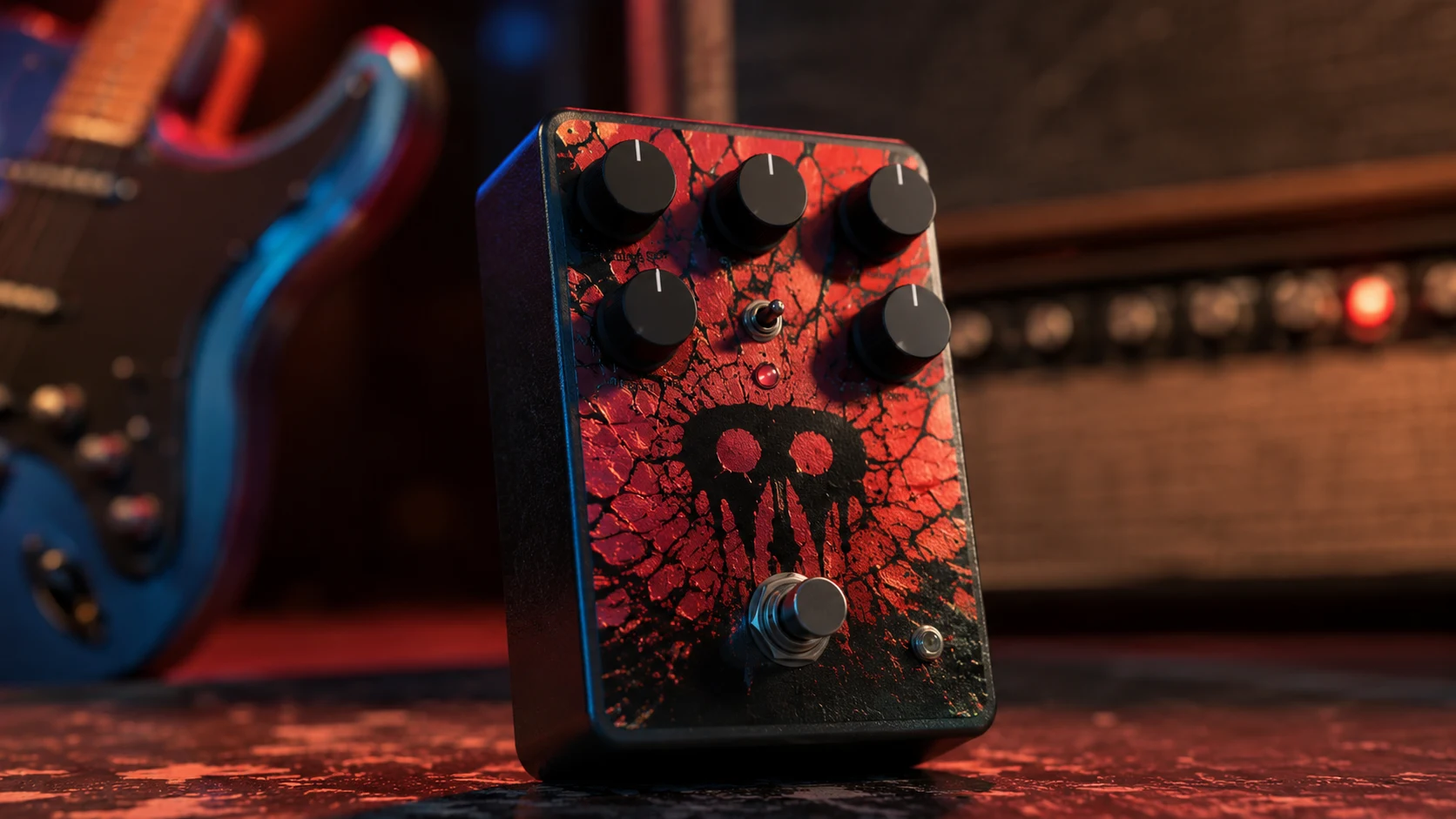
The Deluxe Big Muff Pi 2 lands like the kind of fuzz pedal that does not politely ask for space on your pedalboard; it kicks the door open, fills the room with sustain, and dares your amp to keep up. For players who grew up chasing thick walls of distortion, woolly rhythm tones, and lead lines that feel like they could hang in the air forever, this pedal feels like a very specific kind of event. It is not just another shiny box with a famous name printed on top, because the Big Muff story already carries decades of rock, punk, shoegaze, alternative, doom, and bedroom-recording mythology behind it. What makes this new deluxe version interesting is how it takes that familiar Big Muff attitude and gives it modern control without sanding down the chaos that made the circuit legendary in the first place. In a gear world crowded with modelers, plugins, and ultra-clean digital rigs, the arrival of a louder, smarter, more flexible fuzz box feels almost rebellious.
Why This Fuzz Pedal Feels Bigger Than Another Launch
Every few months, the guitar world gets a new pedal release that makes players pause mid-scroll, zoom in on the knobs, and start imagining where it could fit in their signal chain. The Deluxe Big Muff Pi 2 hits that exact nerve because it taps into something deeper than spec-sheet curiosity. Big Muff pedals have always been more than tools; they are identity machines, shaping how guitarists think about heaviness, sustain, texture, and imperfection. A clean overdrive can make your amp feel expensive, but a great fuzz can make a simple riff feel like a scene from a movie. That is why this release matters: it gives modern players a fresh way to chase old-school danger without feeling trapped by one narrow tone.
The timing also feels right because guitar culture has been circling back toward expressive, physical, slightly messy sounds. After years of polished presets and mix-ready tones, more players are rediscovering the fun of pedals that react differently depending on pickup choice, pick attack, guitar volume, amp EQ, and even how hard the room is being pushed. Fuzz sits at the center of that shift because it is emotional before it is technical. It can sound angry, dreamy, broken, huge, or weirdly beautiful depending on how it is used. The deluxe treatment gives the Big Muff Pi 2 more ways to move through those moods, which is exactly what players want when one song needs a tight rhythm wall and the next needs a screaming lead line.
Deluxe Big Muff Pi 2 and the Return of Wild Sustain
The core appeal of the Deluxe Big Muff Pi 2 is still that massive fuzz character players associate with the Big Muff family, but the updated controls make the experience feel less like fighting a monster and more like learning how to ride one. Traditional Big Muff tones can be glorious, yet they are also famous for swallowing mids, getting huge fast, and sometimes turning a full band mix into a beautiful cloud of confusion. That is part of the charm, but it can also be a problem if the guitarist needs definition during a chorus, a solo, or a recorded part with bass and drums already filling the low end. By adding more control over shaping, gating, and mids, this version turns the fuzz into something more stage-ready and studio-friendly. It still gets wild, but it lets the player choose where the wildness goes.
That matters because sustain is not just about holding notes for a long time. Good sustain gives a phrase emotional weight, letting bends bloom, chords smear into the next beat, and single notes turn into something vocal. A fuzz pedal with serious sustain can make a guitarist play differently, because suddenly there is more space to hang on a note, bend into feedback, or let a riff breathe between attacks. The Deluxe Big Muff Pi 2 is built for that kind of playing, especially for guitarists who want a sound that feels thick but not totally shapeless. It invites slow riffs, heavy hooks, noisy transitions, and lead lines that sound less like a clean performance and more like a controlled explosion.
The Big Muff DNA Still Matters
The Big Muff name carries a lot of weight because so many guitarists have used it to define entire eras of sound. From classic rock sustain to alternative walls of fuzz, from grunge-adjacent heaviness to shoegaze haze, the pedal family has always lived in that sweet spot between distortion and something more extreme. Unlike a tight modern high-gain pedal, a Big Muff often feels wider, thicker, and less controlled in the best possible way. It compresses the signal, adds harmonic density, and makes even simple chord shapes feel larger than they should. The new deluxe version respects that history by keeping the personality intact while adding enough flexibility to make it easier to use in modern rigs.
That balance is important because too much modernization can kill the reason players loved the original sound. If a fuzz becomes too polite, too surgical, or too mix-engineered, it stops feeling like fuzz and starts feeling like another distortion preset. The magic of a Big Muff-style circuit is that it can sound slightly untamed, as if the pedal is always pushing against the boundaries of good behavior. The Deluxe Big Muff Pi 2 does not need to pretend to be clean, transparent, or subtle, because that was never the assignment. Its job is to make the guitar feel bigger, meaner, more dramatic, and more alive.
How the Deluxe Controls Change the Game
The most exciting thing about the deluxe approach is not that it adds more knobs for the sake of looking serious. The real value is that it gives players solutions to problems fuzz fans have been dealing with forever. Classic fuzz tones can be noisy, mids can disappear, low end can become overwhelming, and switching between rhythm and lead settings often requires compromise. A more advanced control set lets the guitarist sculpt the pedal around a real-world setup instead of forcing the amp, band, and song to work around the pedal. That is why this release feels useful not only for collectors, but also for musicians who actually need their fuzz to behave during rehearsals, recordings, and live sets.
Features like a noise gate, tone-shaping options, and mids control are especially meaningful because they answer the most common complaints about huge fuzz pedals. A noise gate can help tame hiss and unwanted noise when the gain is pushed hard, which is a big deal for players using high-output pickups or stacking pedals. Mid control can help the guitar cut through a mix instead of vanishing under cymbals, bass, and vocals. Extra voicing options can open up brighter, more aggressive textures or darker, heavier walls of sound depending on the song. In practical terms, the Deluxe Big Muff Pi 2 seems designed for players who love chaos but still need control over when and how that chaos shows up.
Why Footswitchable Mids Are a Big Deal
For many guitarists, mids are the difference between sounding massive alone and actually being heard with a band. A scooped fuzz tone can feel incredible in a bedroom or studio monitor when there is nothing competing with it, but the same tone can struggle onstage once drums and bass enter the picture. Footswitchable mids change that relationship because they let a player keep the classic wide fuzz character for rhythm parts and then punch forward for leads or hooks. That kind of control is not just convenient; it can change how a guitarist arranges parts. Instead of turning up the volume and hoping for the best, the player can shift the frequency focus and make the guitar speak more clearly.
This is especially useful in modern rock, punk, indie, and heavy alternative music, where guitars often need to move between atmosphere and aggression quickly. A verse might need a hazy, compressed texture that sits behind the vocal, while the chorus needs the guitar to crash into the front of the mix. A bridge might need a lead melody that cuts without losing the fuzz character that defines the song. The Deluxe Big Muff Pi 2 gives players a way to make those moves with one pedal rather than building a complicated chain of boosts, EQs, and gain stages. That makes it feel less like a collector’s remake and more like a working musician’s fuzz machine.
Where This Pedal Fits in Modern Guitar Culture
The modern guitar scene is in a funny place because players have more technology than ever, yet many of the most exciting tones still come from simple ideas pushed hard. Amp modelers can recreate legendary rigs, plugins can stack virtual pedals in seconds, and social media demos can make any new product look massive through the right mix. Still, a physical fuzz pedal keeps attracting attention because it gives musicians a tactile relationship with sound. You twist a knob, hit a switch, change your picking hand, and the guitar responds immediately. That kind of connection is why fuzz still feels culturally relevant, especially for players who want personality instead of perfection.
For Chordpunch readers who follow guitar gear reviews, this release also fits into a bigger trend: analog pedals are not fading quietly while digital gear takes over. Instead, they are becoming more specialized, more intentional, and more performance-focused. Players are not choosing analog because they hate convenience; they are choosing it because the right pedal can inspire a part faster than scrolling through another menu. A deluxe fuzz with real-time control sits perfectly in that lane because it offers enough flexibility for modern expectations while still feeling direct. It belongs to the same culture that loves pedalboards with personality, rigs that look lived-in, and tones that do not sound copied from a factory preset.
From Bedroom Riffs to Stage Volume
The Deluxe Big Muff Pi 2 also speaks to the way guitarists actually make music now. A riff might start as a phone recording in a bedroom, become a demo inside a laptop session, and eventually end up in a rehearsal space with a drummer hitting hard enough to change the entire feel. A pedal that only sounds good in one of those environments becomes frustrating fast. Fuzz in particular needs to survive translation, because what feels huge through headphones can become muddy through a loud amp. The extra tone-shaping tools on a deluxe fuzz help bridge that gap, letting players refine the same core sound across different spaces.
That matters for younger guitarists who are building rigs in stages rather than buying a perfect setup all at once. One player might run the pedal into a small practice amp, another might record direct through an interface, and another might place it before a loud tube combo at rehearsal. Each setup reacts differently, especially with fuzz, because input level, speaker response, and EQ all shape the final tone. A flexible fuzz pedal gives players room to adapt without losing the reason they bought it in the first place. The Deluxe Big Muff Pi 2 feels built for that messy, real-world journey from first riff to final mix.
The Sound: Thick, Mean, and Surprisingly Flexible
At its heart, the appeal of this pedal comes down to sound, and the expectation is clear: it should make fuzz feel bigger, nastier, and more addictive. The classic Big Muff vocabulary is all here in spirit, from saturated sustain to heavy low-end pressure and that unmistakable sense of compression that makes notes feel glued together. What changes with the deluxe format is the amount of control players have over the final shape. Instead of one general fuzz character with a tone knob doing most of the steering, the expanded setup lets guitarists carve a more precise identity. That means the pedal can lean toward doom-laden sludge, bright garage-rock bite, smooth lead sustain, or chaotic noise textures depending on how the player approaches it.
The best fuzz pedals often reward curiosity, and this one seems aimed at people who like spending time with their gear. A player can start with a familiar thick rhythm tone, then use mids to bring back presence, adjust the gate to tighten stops, and use voicing controls to open or darken the high end. That kind of exploration matters because fuzz is not always a plug-and-play effect in the same way as a simple boost. It has a relationship with the guitar’s volume knob, pickup output, amp headroom, and even the player’s touch. The more control the pedal provides without becoming confusing, the easier it becomes to turn that relationship into a signature sound.
For Riffs, Leads, and Noise Breaks
One reason Big Muff-style pedals remain popular is that they work across different musical roles. For riffs, they can create a thick block of sound that makes simple patterns feel heavier and more dramatic. For leads, they can stretch notes into singing lines with enough sustain to make bends and vibrato feel almost vocal. For noise breaks, they can turn feedback, slides, and accidental string contact into part of the performance rather than something to hide. The Deluxe Big Muff Pi 2 expands those roles by making it easier to move between them with more control than a traditional three-knob fuzz usually allows.
That versatility matters in modern music because genre lines are not as clean as they used to be. A guitarist might play indie rock with shoegaze textures, punk energy, metal-inspired breakdowns, and bedroom-pop production all in the same project. A rigid pedal can force that player into one narrow lane, while a flexible fuzz lets the same core sound travel through different moods. The pedal’s deluxe features help it become less of a one-trick wall of noise and more of a tone-shaping platform. That is exactly why a release like this can appeal to collectors, gigging players, producers, and casual riff addicts at the same time.
Why Fuzz Is Having Another Moment
Fuzz keeps coming back because it solves a creative problem that clean perfection cannot touch. In a music culture shaped by digital editing, tight grids, and hyper-polished production, fuzz brings back danger, friction, and emotional overload. It makes a guitar feel physical, sometimes even unstable, which can be exactly what a track needs when everything else sounds too controlled. This is why so many modern players are revisiting older textures, not as nostalgia cosplay, but as a way to make recordings feel more human. A pedal like the Deluxe Big Muff Pi 2 arrives at the perfect moment because it offers that raw feeling with enough control for today’s production standards.
There is also a cultural side to the fuzz revival. Guitar content online has made players more aware of circuit history, pedal variants, rare versions, and the tiny differences that shape famous tones. People do not just want “a fuzz pedal” anymore; they want to know which fuzz, why it matters, how it behaves, and what makes it different from the last version. That curiosity has turned gear discovery into part education, part fandom, and part creative identity. For readers who follow modern guitar tone guides, the Deluxe Big Muff Pi 2 is the kind of release that opens up a bigger conversation about why old-school circuits still inspire new-school players.
Who Should Actually Care About This Pedal?
The obvious audience is any guitarist who already loves Big Muff tones but wants more control than the classic format provides. If you enjoy thick fuzz but have ever wished your tone had more midrange focus, less unwanted noise, or better flexibility between rhythm and lead parts, this pedal should be on your radar. It also makes sense for players who record at home and need one fuzz box to cover multiple layers without every track becoming the same wall of saturation. Producers might appreciate it because a more adjustable fuzz can sit in a mix with less corrective EQ later. Live players may appreciate it even more because being able to shape mids and tame noise on a real stage can be the difference between sounding huge and sounding lost.
That said, this is probably not the first pedal for someone who wants a barely-there gain boost or transparent always-on tone sweetener. The Deluxe Big Muff Pi 2 is still a fuzz-forward machine, and its personality is part of the point. It wants to be heard, felt, and used with intention. Players who prefer super-tight modern metal distortion may need to approach it differently, using the pedal for texture, leads, or layered parts rather than expecting it to behave like a precision high-gain preamp. But for musicians who want character, sustain, and a big emotional footprint, this pedal feels like a serious creative tool.
Best Genres for the Deluxe Big Muff Pi 2
The pedal naturally makes sense for alternative rock, grunge-inspired tones, punk, garage, shoegaze, doom, stoner rock, noise rock, and experimental indie. Those genres benefit from fuzz that can be huge without needing to sound neat all the time. Shoegaze players can use it to create wide layers that melt into modulation and delay, while doom players can lean into sustain and low-end weight for riffs that feel almost geological. Punk and garage players can push it brighter and nastier for aggressive rhythm work that refuses to sound polished. Even pop and hip-hop producers could use it as a texture tool, sending guitar, bass, synth, or samples through it to create a more damaged and memorable edge.
That cross-genre usefulness is important because modern music rarely respects old category borders. A bedroom producer may use a fuzz pedal on a guitar hook one day and a drum loop the next. A touring guitarist may need one pedal to cover vintage-style leads, heavy choruses, and noisy transitions inside a compact board. A songwriter may simply want a sound that breaks them out of predictable chord progressions and pushes them toward a more dramatic arrangement. The Deluxe Big Muff Pi 2 has the kind of personality that can lead the writing process rather than just decorate it after the fact.
How to Think About It on a Pedalboard
Placement matters with fuzz, and the Deluxe Big Muff Pi 2 will likely reward players who experiment rather than blindly copying a standard layout. Many guitarists place fuzz early in the chain so it can interact directly with the guitar signal, but Big Muff-style circuits can also work well after certain drives or before modulation depending on the desired result. Put it before delay and reverb, and the repeats will carry the fuzz texture into a larger atmosphere. Place an overdrive before it, and the pedal may become thicker, more compressed, or more aggressive. Run an EQ after it, and the final shape can be refined even further, although the deluxe controls may reduce the need for extra tone surgery.
Players should also think about the amp as part of the pedal. A clean amp can showcase the full character of the fuzz, while an already dirty amp can turn the sound more chaotic and compressed. Single-coil pickups may bring more bite and clarity, while humbuckers can push the pedal into thicker saturation. Lower guitar volume settings may clean up differently than expected, because Big Muff-style fuzz is not always as glassy and responsive as some vintage fuzz-face circuits. That does not make it less expressive; it simply means the expression comes from density, sustain, EQ movement, and the way the player controls the attack.
The Bigger Trend: Classic Circuits With Modern Control
The Deluxe Big Muff Pi 2 is part of a larger movement in guitar gear where companies are not just recreating classic sounds, but expanding them for players who need more from a single pedal. The old model was simple: reissue a beloved circuit, keep it close to the original, and let nostalgia do the selling. That still works in some cases, but modern players often want the sound of history with the flexibility of current design. They want vintage attitude, but they also want usable switching, noise management, EQ control, and pedalboard-friendly practicality. This pedal fits that direction because it treats the Big Muff legacy as something alive rather than frozen in a museum case.
This matters because the best modern gear does not erase the past; it gives players new ways to use it. A deluxe fuzz can help a guitarist bring classic saturation into modern arrangements, cleaner mixes, and more dynamic live sets. It can also lower the barrier for players who love the idea of a Big Muff but previously struggled with how it sat in their rig. Instead of forcing everyone into one iconic setting, the pedal gives more entry points into the same broad family of sound. That makes it feel less like a niche collector release and more like a statement about where analog fuzz is going next.
Final Take on the Deluxe Big Muff Pi 2
The Deluxe Big Muff Pi 2 feels like the right kind of upgrade because it understands what players actually love about fuzz. It does not try to make the Big Muff identity polite, invisible, or overly refined. Instead, it keeps the huge sustain, saturated personality, and dramatic wall-of-sound energy while giving guitarists more ways to shape the result. That is the sweet spot for a modern fuzz pedal: enough chaos to inspire new riffs, enough control to survive a real mix, and enough character to feel different from the endless stack of safe gain boxes already out there. For players chasing a tone that feels bigger than the room, this pedal has the kind of presence that makes “just one more riff” turn into an entire writing session.
In the end, the appeal is simple: fuzz should feel exciting. It should make a familiar guitar sound dangerous again, turn plain chords into heavy weather, and give leads the kind of sustain that makes time feel slower. The Deluxe Big Muff Pi 2 steps into that role with confidence, bringing the Big Muff story into a more flexible, performance-ready era. Whether it becomes a main pedalboard weapon, a studio texture box, or the secret ingredient for one unforgettable chorus, it has the right ingredients to earn attention from serious tone hunters. In a year filled with gear launches, this one stands out because it does not just promise more fuzz; it promises fuzz that can get wilder, smarter, and more usable at the same time.