
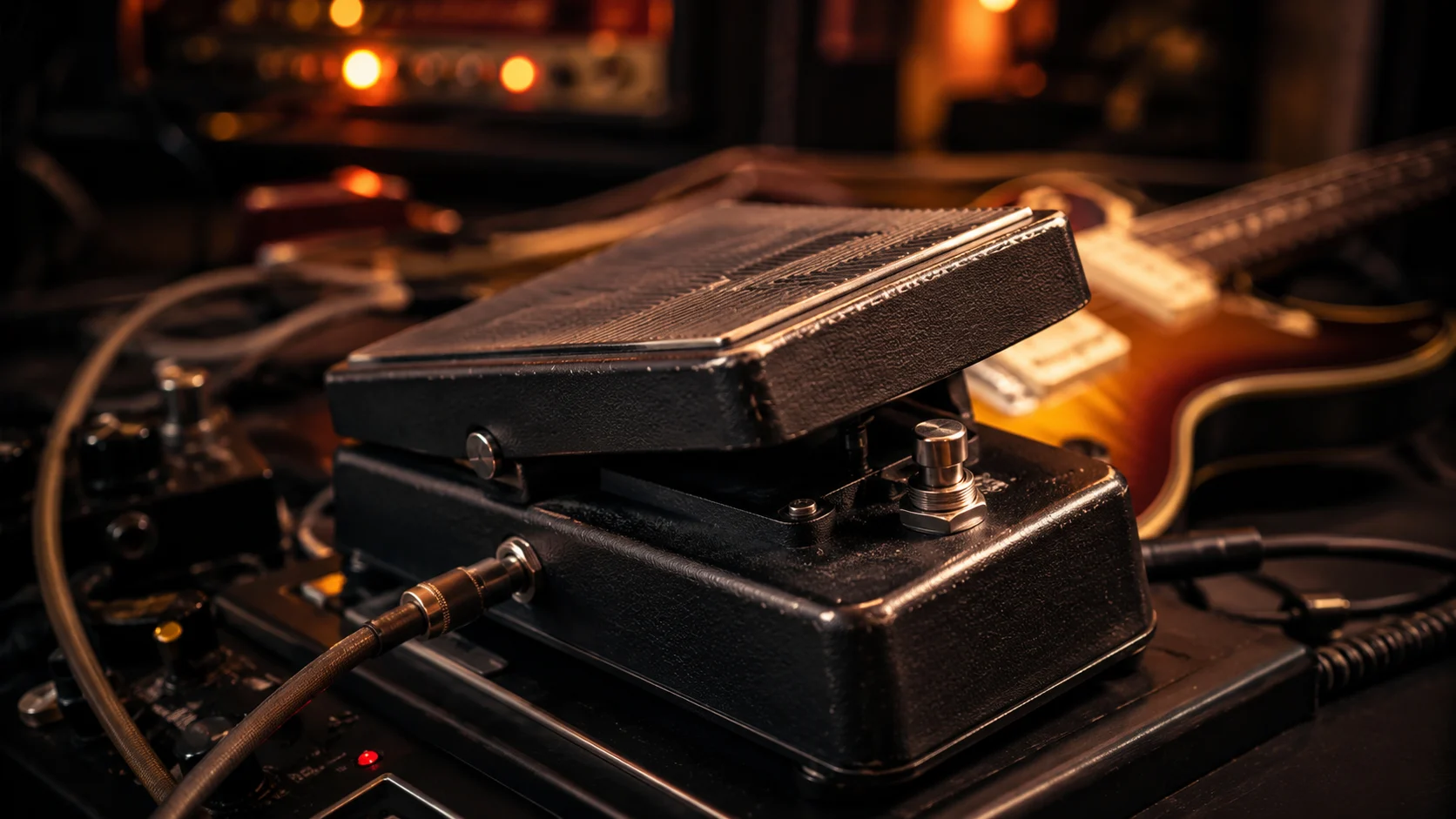
The Behringer Real McCoy Wah arrives at a moment when guitar culture is weirdly split between hyper-modern rigs and old-school tone chasing, and that contrast is exactly what makes this pedal interesting. On one side, players are building silent stages with modelers, impulse responses, MIDI switching, and apps that can turn a phone into a full editing station. On the other side, the same players still light up when a simple foot-controlled filter makes a guitar sound like it is talking, crying, snarling, or laughing through a tube amp. The wah pedal has always lived in that emotional space, where technique, rhythm, and tone become one physical gesture under the foot. Behringer stepping into that lane with a vintage-inspired wah is not just another budget pedal drop; it feels like a direct shot at the boutique market that has been selling nostalgia at premium prices for years.
For Chordpunch readers, this is the kind of gear story that hits beyond the spec sheet, because wah pedals are not background tools. They are personality machines, the type of pedal that can make a basic pentatonic lick sound like a live wire if the player understands timing. The Behringer Real McCoy Wah leans into the language of late-1960s voicing, compact practicality, and affordable access, which is a powerful combo in a market where vintage-style pedals often cost more than beginner guitars. It also arrives during a bigger return to hands-on guitar effects, where musicians want physical gear that feels immediate instead of another menu to scroll through. That is why this pedal is worth watching, even for players who already own a wah and think they have heard every sweep under the sun.
Why the Wah Pedal Still Refuses to Retire
The wah pedal has survived every era of guitar technology because it solves a problem that digital convenience cannot fully replace: it lets a player shape expression in real time with the body. A delay pedal can create space, a fuzz can add chaos, and a chorus can widen a tone, but a wah pedal responds like a second voice attached to the player’s foot. The sound is not only about frequency movement; it is about when the sweep happens, how aggressively the player rocks the treadle, and whether the motion follows the groove or fights against it. That is why the same wah pedal can feel funky in one player’s rig, psychedelic in another, and aggressive in a heavy solo context. The effect is simple in concept, but it exposes touch, rhythm, and taste in a way that makes it timeless.
What makes the current wah conversation especially interesting is that younger players are discovering classic guitar effects through a completely different doorway. Many are not growing up in a world where the local guitar shop is the center of gear education, because tutorials, short-form demos, and bedroom studio breakdowns now shape taste faster than old-school magazine ads ever could. A vintage wah tone can go viral because of a ten-second riff, a pedalboard tour, or a guitarist recreating a famous solo in a small room with budget gear. In that environment, a pedal like the Behringer Real McCoy Wah has a clear cultural lane: it offers a recognizable classic effect without asking players to buy into collector pricing. That matters because modern guitar culture is no longer only about owning rare gear; it is about making sounds quickly, sharing them, and building identity around them.
Behringer Real McCoy Wah and the Vintage Pedal Hunt
The phrase Behringer Real McCoy Wah immediately signals a very specific target: the mythology of early wah pedals and the vocal, mid-forward character that became glued to the history of rock, funk, soul, and fusion guitar. The “Real McCoy” idea is not random branding; it points toward the early wah sound associated with expressive sweep, vocal resonance, and a tone that does not feel sterile. For players who care about vintage flavor, that matters because not all wah pedals behave the same way under the foot. Some are sharp and modern, some are dark and throaty, some are wide and dramatic, and some feel like they sit right in the pocket between clean rhythm and overdriven lead. Behringer’s move is to package that old-school promise in a pedal aimed at musicians who want the vibe without entering the expensive rabbit hole of vintage units and boutique replicas.
The vintage pedal hunt has become one of the strangest parts of modern gear culture because players often chase sounds that were originally born from limitations. Early pedals were not built with today’s obsessively refined expectations, and that is part of their charm. Components varied, tolerances shifted, and different units could develop slightly different personalities over time, which created the kind of inconsistency that collectors now call character. Boutique builders have spent years turning those imperfections into selling points, often recreating famous circuits, inductors, casings, sweep ranges, and response curves for players who want a more authentic feel. Behringer entering that conversation with a lower-priced wah challenges the idea that vintage-inspired expression must stay locked behind boutique pricing.
That challenge is not new for Behringer, because the company has built a large part of its modern identity around making classic-style gear more accessible. In synths, pedals, mixers, interfaces, and studio tools, Behringer often enters spaces where legacy sounds already carry emotional value. That strategy can be polarizing, especially among players who care deeply about originality, small builders, and the craft behind boutique design. Still, the appeal is obvious: many musicians want the sound first, and they want it at a price that does not destroy the rest of the rig budget. The Behringer Real McCoy Wah fits directly into that tension, where affordability, nostalgia, and gear ethics all meet on a crowded pedalboard.
What Makes a Vintage-Style Wah Feel Different
A vintage-style wah is not only about sounding old; it is about how the pedal responds to movement. The sweep needs to feel musical enough that the player can land on expressive vowel-like zones instead of fighting a harsh filter that jumps too quickly. A good wah lets the foot become part of the phrase, almost like a singer shaping vowels inside a melody. When the sweep is too narrow, the pedal can feel boring, but when it is too exaggerated, it can sound cartoonish or disconnected from the guitar. The sweet spot is that flexible middle ground where rhythm parts get more percussive, solos gain vocal emotion, and muted scratches turn into a groove language of their own.
The inductor is one of the most talked-about ingredients in classic wah tone, and gearheads often treat it like the soul of the circuit. While the full sound depends on the entire design, the inductor can influence the resonance, sweep behavior, and personality that players associate with beloved wah pedals. That is why marketing around vintage wah pedals often mentions special inductors, old-school voicing, or holy-grail-style components. Players may not always explain the electronics perfectly, but they can feel the result when a wah has a vocal center that makes riffs pop out of the mix. If the Behringer Real McCoy Wah can capture enough of that feel, it could become a serious option for players who want classic flavor without overthinking every component value.
Another important factor is the physical throw of the treadle, because wah pedals are tactile instruments as much as effects. The angle, resistance, and travel shape how naturally a player can sync the foot with picking hand rhythm. A pedal may sound great in a demo but feel awkward onstage if the sweep activates too suddenly or requires too much ankle movement. This is especially important for players who use wah as part of their core vocabulary rather than an occasional solo effect. In that sense, the Behringer Real McCoy Wah will ultimately be judged not just by clips, but by whether it feels intuitive under pressure during rehearsals, gigs, and recording sessions.
Why Behringer’s Price Strategy Matters
Price is a huge part of this story because guitar pedals have become a serious investment category, not just casual accessories. A player can now build a pedalboard that costs more than the guitar itself, especially if they follow boutique trends, limited runs, and artist-approved reissues. That does not mean expensive pedals are automatically overpriced, because small builders often carry real costs in parts, labor, testing, design, and support. However, it does mean many musicians are priced out of experimenting with classic sounds, especially beginners, students, part-time gigging players, and home producers building rigs one purchase at a time. A vintage-style wah at a lower price can open the door for more players to explore expressive filtering without treating it like a luxury decision.
This is where Behringer tends to create disruption, because the company understands that affordability changes behavior. When a pedal is expensive, players research for weeks, compare endless demos, and sometimes avoid buying anything because the risk feels too high. When a pedal is affordable, the decision becomes more creative and less stressful, which can lead to more experimentation. A guitarist who never thought they needed a wah might add one just to test funk rhythms, psychedelic leads, or filter sweeps in a home recording. That kind of accessibility is why the Behringer Real McCoy Wah could reach players far beyond the vintage collector crowd.
There is also a practical side to affordability that rarely gets enough attention in gear reviews. Working musicians need pedals they can actually use without panic, especially when hauling gear to rehearsals, bars, churches, studios, and small venues where accidents happen. A boutique wah may sound incredible, but some players hesitate to drag rare or pricey units into rough gig environments. A more affordable wah can become the pedal that actually leaves the house, gets stepped on, gets scratched, and becomes part of real musical life. In that way, the value of the Behringer Real McCoy Wah is not only about price; it is about lowering the emotional friction between owning gear and using it hard.
The Classic Wah Sound in Modern Music Culture
Wah pedals are often associated with classic rock icons, but reducing the effect to nostalgia misses how flexible it remains in modern music. In funk and R&B, wah can turn clean rhythm guitar into a tight percussive engine, creating movement without cluttering the arrangement. In alternative rock and indie, it can add unstable color, especially when paired with fuzz, tremolo, or tape-style delay. In metal and hard rock, it can push solos forward with a cutting vowel shape that helps lead lines slice through dense guitars. In hip-hop and modern production, guitar wah textures can become sample-like hooks, adding human motion to loops that might otherwise feel too static.
What makes the effect relevant now is that musicians are blending eras more freely than ever. A bedroom producer might run a Strat through a wah, record it into an interface, chop the performance into a beat, then layer it under synth bass and programmed drums. A live guitarist might use a vintage-inspired wah before a modeler, blending old-school foot expression with modern amp simulation and direct-to-PA convenience. A songwriter might use wah subtly, parking the pedal in one position to create a nasal filtered tone rather than rocking it dramatically. The Behringer Real McCoy Wah enters this wide creative field as a simple device with many possible identities, which is exactly why the wah format keeps coming back.
From Funk Chops to Bedroom Riffs
For funk players, the wah is almost a rhythmic instrument, because the movement of the foot can lock with sixteenth-note strumming and muted right-hand patterns. The pedal does not need to dominate the tone; it can simply make the groove breathe with small shifts in brightness and resonance. For rock players, the same pedal can become more dramatic, especially when paired with overdrive and used to emphasize bends, slides, and sustained notes. For bedroom guitarists, wah can be an instant creativity switch, because even a simple riff feels new when its tonal center moves with each phrase. That broad range is why a vintage-style wah like the Behringer Real McCoy Wah can appeal to players across skill levels instead of staying trapped in one genre lane.
The bedroom angle matters because modern music discovery is increasingly visual and short-form. A guitarist does not need to release a full album to make a sound catch attention; a 20-second riff can travel if the tone has personality. Wah pedals are naturally performative because people can see the foot moving and hear the sound change at the same time. That makes the effect easy to understand even for viewers who do not know anything about guitar circuits. In a content-driven music world, a pedal that looks familiar, reacts physically, and produces a dramatic sound has a built-in advantage.
Where the Behringer Real McCoy Wah Fits on a Pedalboard
Pedal placement is one of the first questions players will ask, because wah pedals interact heavily with everything around them. Traditionally, many guitarists place wah early in the chain, often before overdrive, distortion, and fuzz, so the filter shapes the signal before it gets pushed harder. This placement can create a more vocal and expressive drive tone, especially for classic rock leads and funk-inspired rhythm parts. However, placing wah after drive can produce a more intense and synth-like sweep, which may work better for experimental textures or aggressive modern sounds. The Behringer Real McCoy Wah should be flexible enough to try both approaches, because the best setup depends on the rest of the rig and the player’s taste.
Players using fuzz will want to experiment carefully, because classic fuzz circuits can be sensitive to what comes before them. Some fuzz pedals prefer seeing the guitar pickup directly, and placing a wah in front can change the response in ways that are either magical or messy. That is part of the fun, because many iconic tones were born from imperfect interactions between pedals, cables, pickups, and amps. A wah into fuzz can create a screaming, vowel-heavy lead tone, while fuzz into wah can become sharper and more exaggerated. The point is not to follow one rule forever, but to understand that a wah is a living part of the signal chain rather than a neutral accessory.
For players using amp modelers or digital rigs, the same concept applies with a modern twist. A physical wah before a modeler can give the player real treadle feel while still allowing the rest of the rig to stay compact, direct, and programmable. Some modelers already include wah simulations, but not every guitarist loves expression-pedal setup menus or digital sweep behavior. A standalone wah can make the rig feel more immediate, especially if the player wants one dedicated foot-controlled effect that does not require patch editing. That is another reason the Behringer Real McCoy Wah could find a home with players who are not strictly analog purists.
The Bigger Trend: Affordable Vintage Is Winning
The guitar market has been moving through a fascinating cycle where vintage tones are more popular than ever, but the average player is also more cost-conscious. Inflation, rising instrument prices, and the endless stream of new gear have made musicians more selective about what they actually buy. At the same time, social media keeps feeding players clips of rare amps, old pedals, custom shop guitars, and legendary studio chains. This creates a strange pressure: everyone wants the vibe, but not everyone can or should pay collector-level prices to access it. Affordable vintage-style gear answers that tension by giving musicians a practical entry point into sounds that shaped modern music.
The Behringer Real McCoy Wah sits perfectly inside that trend because it targets an effect with deep cultural memory. Wah is not a niche studio utility that only engineers understand; it is one of the most recognizable guitar effects in popular music. Even casual listeners can tell when a guitar suddenly starts speaking in that vowel-like sweep. By making that sound more affordable, Behringer is not only selling a pedal; it is selling access to a vocabulary that players recognize from decades of records. That is powerful because music gear is never just about hardware, it is about the stories players imagine they can tell with it.
There is also a generational layer to this shift. Gen Z and younger millennial musicians often approach gear with less brand loyalty and more outcome-based thinking. They want to know whether a tool sounds good, records well, fits the budget, and helps them make something worth posting, releasing, or performing. The old hierarchy of “expensive equals serious” does not carry the same weight when players can hear direct comparisons online within seconds. If a budget pedal gets close enough to the desired sound, many musicians will happily choose it and spend the rest of the money on strings, plugins, lessons, or another creative tool. That mindset gives the Behringer Real McCoy Wah a real chance to become more than a curiosity.
Can a Budget Wah Win Over Tone Snobs?
The hardest audience for any affordable vintage-style pedal is the tone-snob crowd, and that is not automatically a bad thing. Serious players often develop strong opinions because they have spent years listening closely, testing gear, and noticing details that beginners may overlook. They care about sweep range, bypass quality, noise floor, enclosure feel, pot durability, and how the pedal reacts with different pickups and amps. A wah pedal especially invites scrutiny because the player is physically interacting with it constantly, so cheap-feeling mechanics can break the illusion fast. If the Behringer Real McCoy Wah wants long-term respect, it has to deliver beyond the first impressive demo clip.
Still, tone snobbery has changed in the modern era because direct comparison culture has made gear myths easier to challenge. Players can now hear affordable pedals next to boutique units, vintage originals, and digital recreations in controlled demos. While online audio is never perfect, it has trained more musicians to judge with their ears rather than only by price tag. Some will still prefer premium wah pedals for build quality, heritage, or subtle feel, and that preference can be completely valid. But if Behringer’s wah gets close enough in the places that matter, it may force even skeptical players to admit that budget gear has become dangerously capable.
The real question is not whether the Behringer Real McCoy Wah can replace every boutique wah on the market, because that is the wrong standard. The better question is whether it can give most players a convincing, inspiring, and usable vintage wah experience at a price that makes sense. If it can do that, it does not need to win every forum debate or impress every collector. It only needs to become the pedal that players keep on the board because it feels good, sounds musical, and earns its space. In the real world, that kind of usefulness matters more than prestige.
Who Should Actually Buy This Pedal?
The most obvious audience is the guitarist who wants a first wah pedal and does not want to overpay before knowing how much they will use the effect. Wah is a personal effect, and not every player ends up bonding with it. Some guitarists buy one, realize it transforms their phrasing, and suddenly cannot imagine a board without it. Others use it for one solo, then leave it parked in the corner for months because it does not fit their style. For that experimental stage, the Behringer Real McCoy Wah looks like a smart entry point because it lowers the risk of discovery.
It also makes sense for gigging players who want a backup wah or a rugged utility option for less predictable situations. Even musicians with more expensive wah pedals may like the idea of a lower-cost unit they can bring to rehearsals, small stages, travel dates, or sessions where gear might get knocked around. The pedal could also appeal to producers who keep a small guitar station in the studio and want clients to have expressive options without building a massive board. In that context, a wah pedal is not just for guitarists; it can shape bass, keys, samples, and re-amped tracks when used creatively. A vintage-voiced wah in the studio can be a color box, not just a rock solo machine.
Beginners should also pay attention, but with one honest warning: a wah will not magically make weak timing sound good. Because the effect is rhythmic and expressive, it rewards players who listen closely and move with intention. That is actually a benefit, because practicing with a wah can teach phrasing, groove, and dynamic control in a very direct way. A simple riff can become a lesson in articulation when the foot has to match the hand. For new players building their sound, the Behringer Real McCoy Wah could become both a tone tool and a practice tool.
What to Listen for Before You Buy
Before buying any wah pedal, players should listen for how the sweep moves through the frequencies they actually use. A wah that sounds amazing on single-coil funk rhythms might feel too thin with high-gain humbuckers, while a darker wah that flatters distorted leads might not have enough sparkle for clean chord work. The best approach is to test or hear the pedal in contexts close to your own setup. Listen to clean rhythm, low-gain crunch, heavier drive, and sustained lead notes instead of judging from one dramatic demo. With the Behringer Real McCoy Wah, the key question is whether the vintage voicing feels musical across those different uses rather than only in one idealized clip.
Players should also pay attention to noise, bypass behavior, and how the pedal handles different output levels. A wah can add magic, but it can also introduce unwanted harshness if the rig is already bright or if the gain structure is messy. The physical switching matters too, because a wah that is annoying to activate can become frustrating during live performance. Some players like a firm switch that clearly engages, while others prefer a smoother feel that does not interrupt the flow. These details may sound small, but they are exactly what separates a pedal you admire online from one you keep using every week.
The build quality question will probably follow this pedal closely, because affordability always creates concern about long-term durability. A wah pedal takes more physical abuse than many stompboxes because the player constantly rocks weight over a moving treadle. Even if the circuit sounds great, the enclosure, pot, switch, and mechanical feel need to hold up over time. Behringer has made many accessible pedals that players use successfully, but a wah has different demands than a small plastic stompbox sitting quietly in a chain. That means the Behringer Real McCoy Wah will earn its reputation through real-world use, not just launch-week excitement.
The Cultural Meaning of a Cheap Classic Sound
There is a bigger cultural story here about who gets access to classic sounds. For decades, guitar culture sometimes treated legendary tone as something hidden inside rare objects, expensive originals, or gear knowledge passed down through gatekeepers. That made the chase exciting, but it also created barriers for players who simply wanted to make music. Affordable gear disrupts that gatekeeping by turning famous sonic ideas into tools more people can actually own. The Behringer Real McCoy Wah may not carry the romance of a vintage original, but it carries a different kind of romance: the possibility that a young player can plug in and discover why the wah pedal mattered in the first place.
This does not erase the value of boutique builders or vintage collectors, because those worlds still have meaning. Small builders often push quality, personality, and craft in ways mass-market companies do not always match. Vintage collectors preserve history, and original gear can inspire people because objects carry stories. But accessibility has its own artistic value, especially when it helps more musicians participate in a sound tradition instead of watching from outside. A budget vintage-style wah can become the first chapter in someone’s tone journey, and that is not a small thing.
Music culture grows when tools move from exclusive spaces into messy, creative, everyday use. The wah pedal itself became iconic because players used it in expressive, surprising, and sometimes accidental ways. It was never meant to be frozen behind glass or treated only as a collectible object. It belongs under a foot, in a groove, through an amp, inside a song, and sometimes in a badly lit bedroom where someone is figuring out their first real riff. That is the environment where the Behringer Real McCoy Wah could matter most.
Final Take: Vintage Wah Energy for the Modern Player
The Behringer Real McCoy Wah is interesting because it understands the current guitar moment better than it might seem at first glance. Players want vintage character, but they also want affordability, practicality, and gear that can survive real creative life. They want classic tones without being forced into collector economics, and they want pedals that feel inspiring quickly rather than requiring a full history lesson before the first riff. A vintage-style wah is the perfect format for that demand because it is emotional, physical, and instantly recognizable. If Behringer delivers a convincing sweep, solid feel, and dependable performance, this pedal could become one of those budget releases that punches way above its price category.
More importantly, this pedal reminds us why guitar effects still matter in a world overloaded with software, presets, and perfect digital recall. A wah pedal is beautifully imperfect because it asks the player to move, listen, react, and shape the phrase in real time. It turns tone into body language, which is something no menu can fully replace. The Behringer Real McCoy Wah may be marketed as a vintage-inspired pedal, but its real relevance is modern: it gives today’s players another affordable way to sound expressive, human, and alive. For a new generation chasing feel over flex, that might be the most valuable feature of all.