
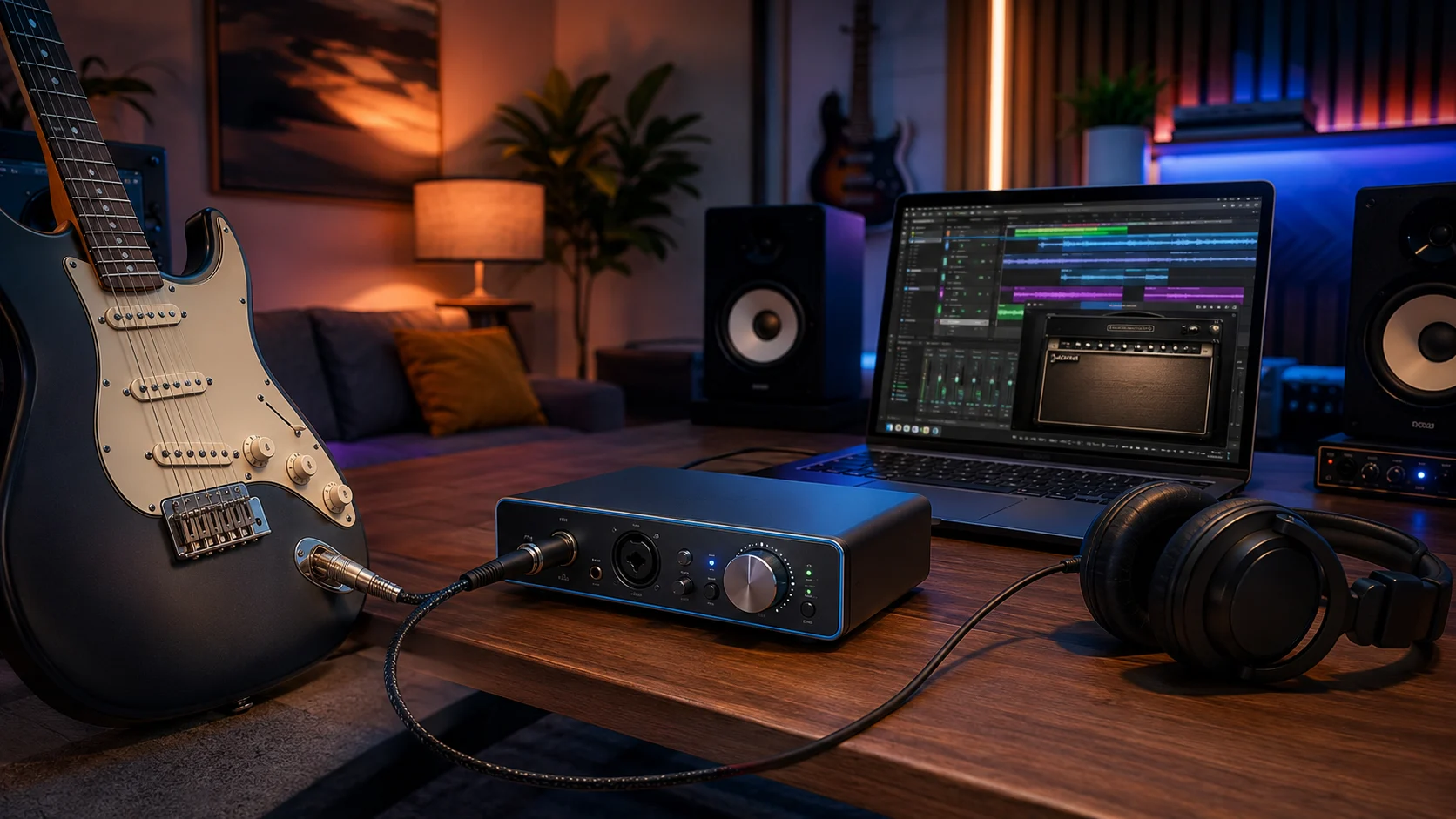
The bedroom studio used to feel like a compromise, the place where guitarists captured ideas before taking the “real” version somewhere more serious. In 2026, that gap feels smaller than ever, because the modern guitar interface 2026 scene is built around one clear promise: cleaner tone, faster workflow, and less friction between a riff in your head and a finished track in your session. The old struggle of noisy inputs, dull direct signals, awkward latency, and endless troubleshooting has slowly been replaced by compact boxes that understand how guitarists actually work. A player can plug in after midnight, track a heavy rhythm part through amp sims, reamp later, monitor with near-zero delay, and still keep the entire setup small enough to live on a desk next to a laptop. That shift is not just about convenience; it is changing how modern guitar music gets written, produced, shared, and judged.
For ChordPunch readers, this topic hits right where music guides, gear culture, and home-recording reality meet. A guitar interface is no longer just an entry-level USB box that gets sound into a computer. It has become the middle layer between playing, producing, tone-shaping, practicing, streaming, collaborating, and finishing songs without needing a traditional studio. The best devices now feel less like technical accessories and more like creative instruments, especially when they pair strong instrument inputs with software bundles, direct monitoring, loopback routing, reamp-friendly outputs, and simple controls that do not punish beginners. That is why guitar interface 2026 is not only a keyword for gear shoppers; it is a snapshot of how guitar recording has grown up inside the home studio era.
Why Home Guitar Recording Feels Different in 2026
There was a time when recording guitar at home came with a long list of little problems that stacked up quickly. The guitar signal might be too weak, the interface preamp might color the tone in a weird way, the amp simulator might feel disconnected from the fingers, and the latency could make even simple riffs feel slightly off. Guitarists learned to live with those flaws, often blaming themselves when the performance felt stiff or the tone sounded flat. In 2026, the better interfaces are designed with those specific pain points in mind, and that makes the whole process feel more natural. Instead of fighting the setup, players can focus on performance, arrangement, and tone decisions that actually matter.
The biggest change is that companies finally understand that guitarists do not use interfaces the same way vocalists, podcasters, or keyboard producers do. A guitar pickup sends a signal that needs the right impedance, the right headroom, and the right conversion path to stay alive once it enters the digital world. When that front end is weak, even the best amp plugin can feel like a cardboard version of the real thing. When the input is built well, palm mutes hit harder, clean tones keep their sparkle, and dynamic playing still feels expressive after processing. This is where a modern guitar audio interface earns its place, because the first inch of the signal chain can shape everything that follows.
Another reason 2026 feels different is the rise of serious laptop studios. Many guitarists are no longer building rooms around giant racks, heavy amps, and complex patch bays. They are building flexible systems around a laptop, a pair of headphones, a small monitoring setup, a few pedals, and an interface that can handle both quick demos and polished production. That portable mindset has changed what people expect from gear. A useful interface has to sound good, but it also has to move easily, connect reliably, and stay simple when inspiration shows up fast.
The Guitar Interface 2026 Standard Is About Feel
Specs still matter, but feel is the word that keeps coming back when guitarists talk about recording direct. Low noise, strong converters, and clean gain are important, yet none of that matters if the player feels disconnected while tracking. In the past, guitarists often tolerated a slight delay between picking a note and hearing the processed sound, especially when using heavy amp sims or big sessions. That delay might look small on paper, but it can change how aggressively someone picks, how confidently they bend, and how naturally they lock into the groove. A strong guitar interface 2026 setup reduces that invisible gap and gives players a more immediate connection to the sound.
This matters even more now because so much modern guitar tone is built inside software. Amp modeling has become more detailed, cabinet impulse responses are everywhere, and pedal-style plugins can recreate complex signal chains without filling a room with hardware. The interface has to deliver a clean, responsive signal into that digital world, otherwise the entire chain starts from a weak source. A good interface will not magically turn a bad take into a great one, but it can preserve the touch, timing, and energy of a good performance. That preservation is what makes home recordings feel less like sketches and more like records.
The emotional side of this is easy to underestimate. When a guitarist hears a tone that responds well, they play longer, try better ideas, and stop second-guessing every note. When the sound feels dull or delayed, the creative session gets smaller because the player starts editing their own instincts. In that sense, an interface is not just a technical purchase; it is a confidence purchase. The right box can make a small room feel like a place where serious music can happen.
Inputs, Headroom, and the Real Meaning of Clean Tone
Clean tone does not simply mean a noise-free signal with no distortion. For guitarists, clean tone means the interface captures the instrument honestly before any creative processing begins. A high-output humbucker, a vintage-style single-coil, an active pickup, and a pedalboard output can all hit an interface differently. If the input stage clips too early, feels too dark, or responds unevenly, the player may spend hours adjusting amp settings without realizing the problem started before the plugin. That is why headroom has become one of the quiet heroes of the modern home studio guitar recording conversation.
In 2026, more guitar-focused interfaces are being marketed around instrument-ready inputs that can handle louder pickups and pedal chains with fewer surprises. This is important for players who record high-gain music, funk cleans, ambient textures, math-rock lines, or anything that depends on touch. A spiky transient from a hard-picked note should not collapse into ugly digital harshness before it reaches the amp sim. A soft fingerpicked phrase should not disappear into noise because the gain structure is poor. The best interface gives the player room to move, which is exactly what real musical dynamics require.
Noise is still part of the story, especially for guitarists who stack gain. A single-coil pickup can hum, a pedalboard can introduce hiss, and a poorly powered laptop setup can add strange digital artifacts. A good interface cannot fix every issue in the chain, but it can avoid making the problem worse. Balanced outputs, stable drivers, clean headphone amps, and sensible gain controls all help keep the setup predictable. For anyone building a serious home workflow, those boring details become the difference between a track that sits well in a mix and one that needs constant repair.
Why Instrument Inputs Matter More Than Branding
It is tempting to choose an interface based on brand hype, color, influencer placement, or the biggest software bundle. Those things can matter, but the instrument input deserves more attention than the box art. A guitarist should care about how the interface handles direct input, how easy it is to set levels, and whether the device stays stable during long recording sessions. Some interfaces are excellent for vocals but only average for guitar, while others are clearly designed with guitarists in mind. The smartest buying decision starts with the signal path, not the marketing slogan.
This is where gear reviews become useful when they go beyond listing features. A proper review should test active and passive pickups, clean and distorted tones, headphone monitoring, amp sim response, and real-world latency. It should explain whether the interface feels inspiring during tracking, not just whether it technically works. Guitarists do not need every device to be expensive or studio-grade, but they do need honest guidance about where the money actually improves the experience. In 2026, the best reviews are less about flexing specs and more about answering one simple question: does this help you record better guitar faster?
Amp Sims Made Interfaces More Important, Not Less
There is a funny misconception that software has made hardware less important. In reality, amp sims have made the interface more important because they reveal flaws quickly. A great amp plugin can respond beautifully to pick attack, volume-knob changes, and subtle muting, but only if the signal arriving from the guitar is strong and clean. When the interface input is noisy, overloaded, or poorly matched, the plugin may sound fizzy, thin, or strangely compressed. Many players blame the amp sim first, but the interface is often the hidden variable.
The modern amp sim ecosystem is incredibly powerful because it gives guitarists access to tones that once required expensive amps, microphones, cabinets, rooms, and engineering experience. A player can build a polished metal chain, a glassy indie clean, a shoegaze wall, or a vintage blues tone without waking the neighborhood. That freedom has reshaped how songs are written because the final production tone can appear early in the demo process. However, the more realistic these plugins become, the more they demand a reliable input chain. A guitar interface 2026 choice therefore becomes part of the tone design, even when all the obvious tone shaping happens on screen.
Latency is especially important when using amp sims live while recording. Some players monitor through direct hardware paths, while others rely on software monitoring so they can hear the full amp chain during the take. If the round-trip latency is too high, the player may unconsciously rush, drag, or lose connection with the groove. Better drivers, faster USB performance, and efficient software settings all help, but the interface still plays a central role. A good system makes the virtual amp feel close enough that the guitarist stops thinking about the computer.
The Laptop Studio Is Now a Real Guitar Room
The phrase “home studio” used to suggest a room full of gear, foam panels, cables, stands, and maybe one corner that always looked chaotic. Now, for many guitarists, the studio is a laptop bag, an interface, a compact controller, headphones, and a small collection of carefully chosen tools. This does not make the work less serious. In fact, it often makes the creative process more consistent because the same setup can travel from bedroom to rehearsal space to hotel room to writing camp. The USB guitar interface has become the anchor of that portable recording identity.
That portability affects sound culture in a big way. Guitarists can now make finished-sounding demos while traveling, collaborate online without waiting for studio time, and send stems that already include strong tones. Producers can ask for a revised rhythm part and receive a clean DI plus a processed version within minutes. Session players can keep multiple tones ready for different clients, while independent artists can build full arrangements without renting a room. The result is a more fluid music-making culture where guitar ideas move faster and production quality no longer depends entirely on location.
Still, this flexibility comes with a new kind of responsibility. When everyone has access to decent tools, the bar rises for arrangement, taste, and decision-making. A clean recording chain will expose sloppy timing just as clearly as it captures great tone. A powerful interface will not write a better part, choose the right chord voicing, or make a chorus feel bigger by itself. What it does is remove excuses, which can be both liberating and slightly uncomfortable for modern players.
Why Simplicity Wins in Small Studios
The best home setups are not always the ones with the most gear. A simple recording chain often leads to better decisions because the player spends less time diagnosing problems and more time listening. Guitar into interface, interface into laptop, amp sim on the track, headphones on, record enabled, and the idea is alive. That basic flow sounds obvious, but it is powerful because it protects momentum. In songwriting, momentum can be more valuable than another menu of advanced settings.
This is why beginner-friendly interfaces still matter even as the market gets more advanced. Not every guitarist wants to manage complex routing, multiple monitor mixes, or deep DSP systems. Some players simply want a reliable way to record riffs that sound good enough to inspire the next section of a song. Others want a compact upgrade from phone demos and practice amps. In that space, the best record guitar at home advice is not to buy the most complicated device, but to buy the one that makes recording feel repeatable.
Reamping, DI Tracks, and the New Editing Mindset
One of the biggest mindset shifts in guitar recording is the acceptance of the DI track as a creative safety net. A dry direct signal might sound boring by itself, but it gives producers and guitarists freedom after the performance is captured. They can change amp models, swap cabinets, adjust gain, blend tones, or send the track through real hardware later. This workflow used to feel like a pro-studio move, but it is now part of everyday home production. A solid guitar interface 2026 setup makes that DI track clean enough to be useful instead of merely convenient.
Reamping is especially valuable because guitar tone decisions are often emotional in the moment. A sound that feels massive while writing at night may feel too dark in the full mix the next morning. A lead tone that seemed expressive alone might crowd the vocal once the arrangement fills out. With a clean DI, the player does not have to replay the entire part just to fix the tone. The performance stays intact while the sonic character can evolve with the song.
This workflow also helps collaboration. A guitarist can send both the processed tone and the DI to a producer, giving them a clear reference and a flexible source. The producer can keep the vibe while adjusting the final sound to fit drums, bass, synths, and vocals. That saves time, reduces confusion, and makes remote production feel more professional. In modern sound culture, where tracks often move across cities and time zones before release, that flexibility matters a lot.
How to Choose a Guitar Interface Without Overthinking
Buying an interface can get overwhelming because every model promises clarity, speed, and studio quality. The smarter approach is to start with your actual recording life instead of chasing the most impressive feature list. A solo guitarist who mainly records one instrument at a time needs different things than a songwriter who records vocals, stereo pedals, synths, and live acoustic parts. A player who uses amp sims heavily should care about latency and instrument input quality. A guitarist who wants to capture pedals or reamp through hardware should look more closely at outputs, routing, and gain staging.
Budget also matters, but not in the way gear culture sometimes suggests. Entry-level interfaces are better than they used to be, and many players can make serious music with affordable tools. The key is knowing where cheaper devices may cut corners, such as headphone output power, driver stability, input headroom, or bundled software quality. Midrange interfaces often add better monitoring, stronger build quality, and smoother workflow rather than instantly magical tone. High-end options can be excellent, but they only make sense if the rest of the system and the user’s needs justify the jump.
For many players, the best move is to choose an interface that solves the next obvious problem instead of trying to solve every future problem at once. If your recordings are noisy, prioritize input quality and gain structure. If your playing feels delayed, look at latency performance and driver reputation. If your demos are strong but your workflow is slow, choose a device with better monitoring and simpler controls. Practical decisions usually beat fantasy shopping, especially in a home studio where speed and consistency shape the final result.
- Choose strong instrument inputs if guitar is your main source.
- Prioritize low-latency monitoring if you track through amp sims.
- Look for clean headphone output if you record quietly at night.
- Consider extra outputs if you plan to reamp or use hardware pedals.
- Value stable drivers and simple controls over flashy extras.
Modern Sound Culture Is Built on Faster Capture
The cultural impact of better guitar interfaces goes beyond gear shelves and review videos. Faster capture changes what music sounds like because ideas survive the distance between inspiration and execution. A riff recorded five minutes after it appears often has a different energy than a riff reconstructed days later in a studio. Modern interfaces help preserve that first spark with enough quality that the original take might even survive into the final version. That immediacy is one reason home-recorded guitars now show up across indie, pop, metal, electronic, worship, hip-hop, and cinematic music without sounding automatically amateur.
This speed also affects learning. Players can record themselves more often, listen back honestly, compare tones, study timing, and build arrangements without needing outside permission. The interface turns practice into documentation and documentation into production. A guitarist who records regularly starts noticing details that casual playing can hide, from inconsistent palm muting to chord noise between transitions. That feedback loop can be brutal at first, but it is one of the fastest ways to grow.
There is also a social layer to this shift. Short-form clips, online collaborations, remote session work, and creator-driven gear culture all reward musicians who can capture good sound quickly. A player does not need a million-dollar studio to share a riff that feels alive. They need a clear signal, a usable tone, and enough confidence to hit record before the idea fades. That is why the modern guitar recording interface is both a technical tool and a cultural object.
Where Gear Reviews Should Go Next
As interfaces become more capable, reviews need to become more musician-centered. It is no longer enough to say a device has clean preamps, USB-C, and a nice metal case. Guitarists need to know how it behaves in real sessions, whether it handles hot pickups, whether the headphone amp can keep up with dense tones, and whether software monitoring feels natural. They need to know if setup is beginner-friendly or if the control app adds confusion. They also need honest discussion about who should skip a device, because not every good interface is good for every player.
The best future music guides will connect specs to creative outcomes. Instead of treating sample rate, bit depth, and input count as isolated numbers, guides should explain how those choices affect a guitarist’s real workflow. Does the device help a songwriter finish demos faster? Does it make an amp sim feel more responsive? Does it make reamping easier for producers? Does it give beginners a clean path into recording without drowning them in settings? Those are the questions that actually shape buying decisions.
ChordPunch sits naturally in that conversation because modern guitar culture needs writing that understands both the player and the production chain. Gear is exciting, but it is only meaningful when it helps someone make sound with more confidence. The interface market in 2026 is crowded, and that makes guidance more valuable, not less. Readers do not just need a list of boxes; they need a clear way to understand what each box changes about the act of making music.
The Future of Guitar Interfaces Looks More Hybrid
The next wave of interface design will likely become more hybrid, blending clean recording, onboard processing, creator-friendly routing, and deeper software integration. Guitarists already expect one small device to serve multiple roles, from practice rig to demo station to streaming hub to remote session tool. That expectation will keep pushing brands to make interfaces that are not only better sounding, but also easier to understand. The winners will not be the devices with the longest spec sheets. They will be the ones that make serious recording feel normal for people who do not want engineering to interrupt music.
Artificial intelligence may also become part of the workflow, though the most useful applications will probably be practical rather than flashy. Tone matching, automatic gain setup, noise detection, smart routing suggestions, and mix-ready monitoring chains could help players get started faster. However, the core job of the interface will stay the same: capture the performance honestly and let the musician shape it from there. A guitar track still begins with fingers on strings, and no feature can replace the human timing, pressure, and attitude inside a take. Technology can support that moment, but it should not flatten it.
There is also room for interfaces to become more transparent about education. New players often do not know why their tone sounds wrong, so they change random settings until something improves. A smarter ecosystem could teach gain staging, pickup behavior, monitoring choices, and DI workflow directly inside the setup process. That would make gear less intimidating and help more guitarists build confidence early. In a market full of options, the interface that teaches while it records could become especially powerful.
Conclusion: Cleaner Tone Starts Before the Plugin
The story of guitar interface 2026 is really the story of home recording becoming mature. Guitarists no longer have to treat direct recording as a rough draft, a compromise, or a temporary placeholder before the “real” studio take. With the right interface, a laptop setup can capture clean DI tracks, responsive amp sim performances, polished demos, and production-ready ideas from almost anywhere. The gear is smaller, the workflow is faster, and the distance between inspiration and release keeps shrinking. That is a major win for anyone trying to make music on their own terms.
Still, the best lesson is simple: cleaner tone starts before the plugin. It starts with the guitar, the player, the input stage, the gain structure, the monitoring path, and the confidence to record without overthinking every technical detail. A great interface will not write the riff, but it can make the riff easier to capture in its strongest form. For modern guitarists, that is more than enough reason to care about this category. In 2026, the home studio is not waiting for permission anymore, and the guitar interface is one of the quiet reasons it sounds so much better.