
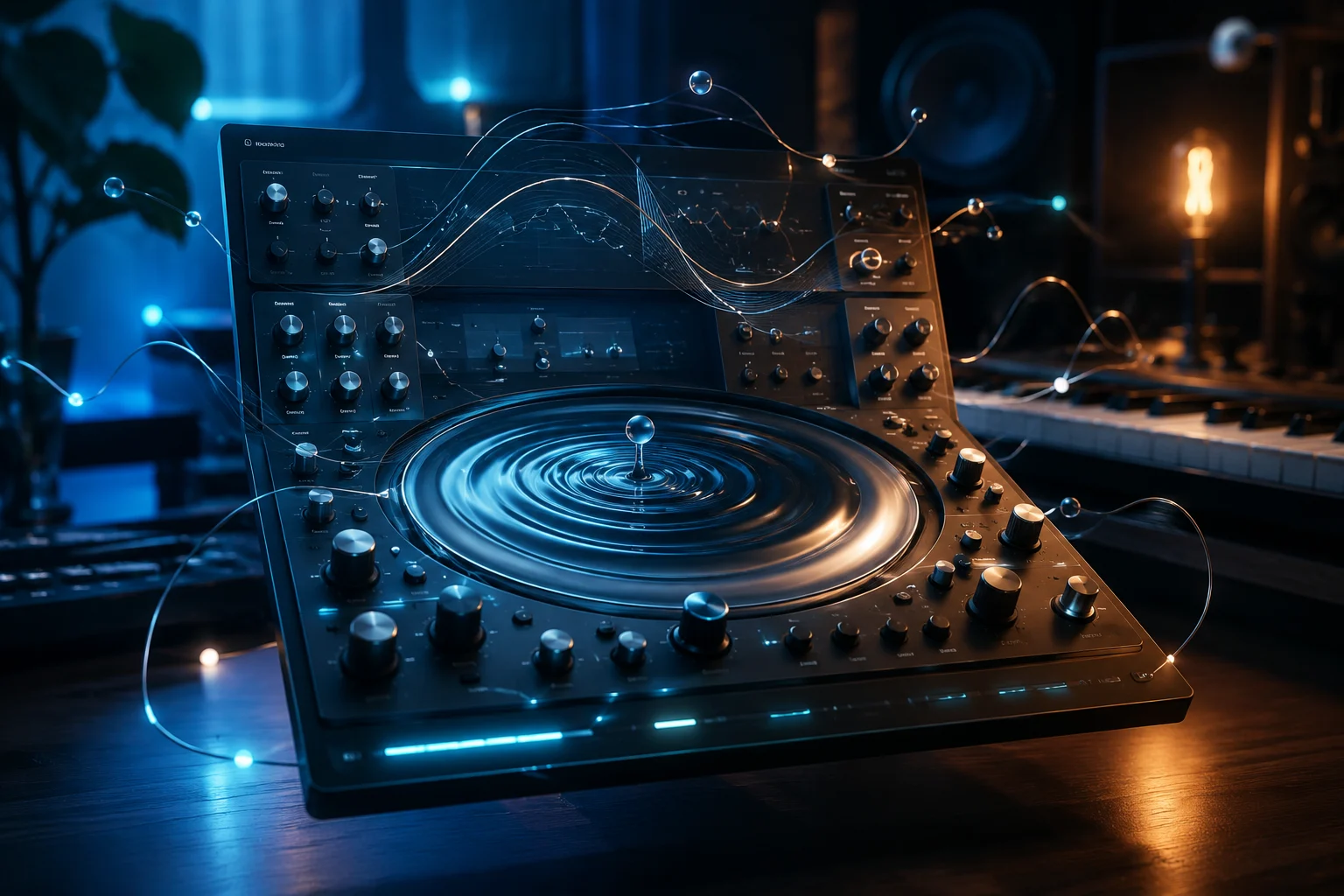
The synth world has spent years chasing sharper wavetables, cleaner presets, and bigger sample libraries, but reFX Rippler lands with a different kind of energy: it makes sound feel like something you can almost touch. Instead of treating tone as a flat digital shape on a screen, this new physical modeling synth leans into motion, resonance, impact, and material behavior, which gives producers a more tactile way to build futuristic sounds. That matters because modern music production is no longer just about stacking pretty presets until a track feels expensive. The new flex is having a sound that reacts, breathes, bends, and carries its own personality before the mix chain even starts. In that sense, reFX Rippler feels less like another plugin launch and more like a reminder that synthesis can still feel weird, alive, and genuinely experimental.
For a company long associated with polished electronic production tools and ready-to-use sound design, Rippler feels like a fascinating shift in attitude. It does not abandon the glossy modern workflow that producers expect from reFX, but it pulls that workflow toward a more hands-on sound design culture. The idea is simple on the surface: use physical modeling to create tones that behave like vibrating objects rather than static oscillator stacks. Underneath that idea, though, is a deeper creative question about where electronic music is heading in 2026 and beyond. When every laptop can generate massive synths, cinematic pads, and radio-ready drops, the next frontier is not always louder or bigger; sometimes it is more physical, more responsive, and more human.
Why reFX Rippler Feels Different From the Usual Synth Drop
Most plugin releases arrive with familiar promises: more presets, more oscillators, more effects, more ways to sound professional in less time. That formula still works because producers are busy, deadlines are real, and nobody wants to spend three hours designing a bell pluck when a finished patch can do the job in seconds. But reFX Rippler sits in a more interesting lane because it is not only selling speed; it is selling a different relationship with sound. Physical modeling invites the producer to think about strike, resonance, tension, damping, body, and response, which are ideas usually associated with acoustic instruments. Instead of asking “what waveform should I choose,” Rippler nudges the user toward asking “what kind of object is making this sound, and how does it move?”
That shift may sound subtle, but it can change the whole sound design process. In a typical subtractive or wavetable synth, the producer often begins with a waveform, shapes it through filters, adds movement through modulation, and then polishes it with effects. In a physical modeling environment, the source feels more behavioral from the beginning because the tone can suggest strings, membranes, bells, plates, tubes, or imaginary hybrid objects. This is why physical modeling synths can feel strangely organic even when they are making sounds no traditional instrument could create. They do not just imitate acoustic instruments; at their best, they create impossible instruments that still obey a kind of believable physical logic.
Rippler’s appeal is also tied to timing. Producers are surrounded by AI tools, loop services, preset packs, and auto-generation features that can make music creation feel faster but sometimes flatter. A synth like this pushes in the opposite direction by rewarding curiosity and careful listening. It gives sound designers a reason to slow down and notice how a tone changes when its body rings longer, when the strike becomes sharper, or when a resonator starts to feel metallic instead of wooden. That kind of interaction can bring back the playful side of production, especially for artists who feel boxed in by template-driven workflows.
The Physical Modeling Synth Moment Is Finally Loud
Physical modeling has never been new, but it has often lived slightly outside the mainstream conversation. For years, it was the interesting corner of synthesis that sound designers loved, academic audio people respected, and experimental producers quietly used when they wanted mallets, plucks, resonant hits, or strange acoustic-like textures. Meanwhile, the wider producer crowd was busy with wavetable giants, sample-based workstations, analog emulations, and cinematic libraries. That balance is starting to change because modern tracks need sounds that cut through without sounding like the same recycled pack everyone else downloaded. A physical modeling synth gives producers a way to create tones that feel familiar enough to connect emotionally but unusual enough to stand out in a crowded mix.
The rise of tactile sound design also matches the broader culture around modern music tools. Producers now talk about workflow almost like guitarists talk about feel, because the way a tool responds can shape the ideas that come out of it. When a plugin reacts musically, the user does not feel like they are programming a spreadsheet of parameters. They feel like they are exploring an instrument, and that difference can lead to better decisions. In that context, Rippler arrives at a smart moment, when producers want sound design that is deep but not cold, flexible but not overwhelming, and modern without feeling sterile.
This is also why gear reviews in music tech are no longer only about specs. A synth can have impressive numbers and still fail to inspire if the workflow feels lifeless. What matters now is whether the instrument helps musicians find ideas faster, build signature textures, and create sounds that do not collapse into the same playlist-friendly sameness. Rippler’s physical approach gives reviewers and producers something meaningful to discuss beyond the usual checklist. It becomes less about whether the plugin has enough features and more about whether those features create a convincing, playable, emotionally useful sound world.
From Oscillators to Objects
The most exciting thing about Rippler is the way it reframes a synth patch as an object rather than a stack of modules. In a traditional synth mindset, the sound begins as a signal that gets shaped through a chain of tools. In a physical modeling mindset, the sound begins as an event, something is struck, excited, disturbed, or set into motion. That event passes through a resonant structure, and the character of that structure defines how the tone blooms, decays, rattles, rings, or snaps back. This is why a simple pluck can feel more alive than a heavily processed preset, because the motion inside the sound carries emotional information before the producer adds anything else.
For Chordpunch readers, that object-based thinking is especially useful because it connects gear culture with actual musical choices. A guitarist understands that a string, body, pickup, pedal, and amp all shape the final sound through physical and electrical interaction. A drummer understands that a snare’s shell, head tension, stick angle, and room response can completely change the vibe. Rippler brings a similar mindset into the software synth space, even if the final result is fully digital. It gives electronic producers a language that feels closer to instruments, not just interfaces.
How reFX Rippler Fits Modern Sound Culture
reFX Rippler is not arriving in a vacuum; it is landing inside a music culture that is actively rethinking originality. The internet has made production knowledge more open than ever, but it has also made trends move almost too quickly. A drum sound can go viral, become a preset pack, appear in thousands of beats, and feel tired within weeks. In that environment, producers need tools that do not just imitate what is already popular but help them build sounds with their own internal character. Rippler fits that need because physical modeling can produce textures that feel personal even before the user starts heavy processing.
This matters across genres, not only in experimental electronic music. Pop producers can use resonant plucks to create hooks that feel lighter than a guitar but more physical than a basic synth stab. Ambient artists can stretch ringing bodies into evolving beds that sound somewhere between metal, glass, and memory. Hip-hop and trap producers can use percussive modeled tones as melodic drums, giving beats a sharper identity without crowding the vocal. Even film and game composers can use physical modeling to create invented instruments that feel believable inside fictional worlds.
The broader cultural angle is that listeners are getting better at spotting generic sound. They may not know the name of a plugin or the technical method behind a patch, but they can feel when a song is built from the same familiar ingredients as everything else. This is why textured sound design has become a quiet form of branding. A unique pluck, a strange bell, or a resonant hit can become part of an artist’s fingerprint. Rippler gives producers another route toward that fingerprint, especially if they are willing to move beyond preset browsing and actually shape the behavior of the sound.
Why Producers Are Tired of Flat Perfection
There is a reason many modern producers keep adding noise, saturation, tape wobble, vinyl texture, room sound, and weird artifacts to otherwise clean digital tracks. Perfect sound can be impressive, but it can also feel emotionally empty when everything is too polished. Physical modeling offers a different kind of imperfection because the movement comes from the simulated behavior of the instrument itself, not only from effects placed at the end of the chain. A resonator that rings a little unexpectedly can make a loop feel less robotic. A percussive tone that changes with velocity or modulation can make a programmed part feel more performed.
This is where Rippler could become especially useful for producers who want controlled unpredictability. Randomness by itself is not always musical, and too much generative behavior can make a track feel unfocused. But physical response gives variation a reason, because the sound changes as if something inside it is reacting to energy. That makes the unpredictability feel more intentional and easier to mix into a real arrangement. It also helps producers build loops that remain interesting after repeated listens, which is a huge deal in music built around repetition.
Sound Design Lessons Inside reFX Rippler
The best way to understand reFX Rippler is not to think of it as a replacement for every synth in a producer’s folder. It is better viewed as a specialized instrument for moments when a track needs tone with body, motion, and identity. A producer might still reach for a wavetable synth for aggressive leads, a sample library for realistic orchestral layers, or a classic analog emulation for warm bass. Rippler’s lane is different because it shines when the sound needs to feel struck, resonant, metallic, wooden, glassy, elastic, or physically alive. That makes it a powerful creative tool, not just another item in the endless plugin pile.
One useful lesson is that the start of the sound matters as much as the tail. In many synth patches, the attack is treated like a volume setting: fast for plucks, slow for pads, somewhere in between for keys. In physical modeling, the attack can feel like the moment of contact, which means it carries character before the note fully develops. A sharper excitation can make a tone feel like a mallet, a finger tap, a pick, or something completely fictional. That tiny first moment can determine whether the sound feels delicate, aggressive, expensive, broken, or intimate.
Another lesson is that decay is not just an ending. In modeled sounds, decay can be where the personality lives because the resonator reveals its material over time. A tone that begins like a simple pluck might fade into a bell-like shimmer, a hollow tube, or a damped wooden knock. That movement gives producers more storytelling power inside a single note. Instead of relying on big chord changes or heavy automation to create emotion, they can let the sound itself carry micro-drama through its natural-feeling response.
Where Rippler Could Fit in a Real Track
In a real production session, Rippler could be the tool that turns a basic idea into something memorable. Imagine a simple four-chord progression that feels decent but not special. A normal synth key patch might fill the space, but a resonant physical modeling tone could make each chord feel like it was played on a strange handmade instrument. Add subtle modulation, shape the decay, and suddenly the progression has movement even before drums enter. That is the kind of upgrade that does not scream for attention but quietly makes the track feel more expensive and more personal.
For beatmakers, Rippler could work as a melodic percussion engine. Instead of using the same rimshots, bells, and one-shot plucks found in common kits, a producer could design tuned hits that live between drum and melody. These sounds can sit beautifully in sparse arrangements because they carry rhythm and pitch at the same time. They also leave room for vocals because their identity comes from resonance and movement, not necessarily from huge stereo width or heavy frequency masking. In modern rap, alt-pop, and electronic R&B, that kind of detail can make a beat feel curated instead of assembled.
For ambient and experimental artists, the appeal is even more obvious. Physical modeling can turn tiny gestures into long, evolving textures that feel like imaginary acoustic spaces. A pluck can become a frozen bell cloud, a metallic tap can stretch into a drone, and a modeled resonator can become the emotional center of an entire composition. These sounds often work well with reverb and delay because they already contain rich harmonic movement. When processed carefully, they can become cinematic without relying on obvious orchestral clichés.
The reFX Factor: Polish Meets Curiosity
Part of what makes reFX Rippler interesting is the brand context. reFX is not some obscure lab project with a chaotic interface and a tiny cult following. The company is known by many producers for polished, accessible music tools that fit directly into commercial production workflows. That reputation can help physical modeling reach users who might otherwise avoid it because they assume it is too technical, too academic, or too niche. If Rippler brings that sound design approach into a cleaner and more approachable environment, it could introduce a wider producer base to a deeper way of thinking about synthesis.
That combination also creates a useful tension. On one side, physical modeling attracts users who love experimentation, deep parameters, and strange sonic results. On the other side, reFX’s broader audience often wants fast inspiration, polished presets, and an interface that does not punish them for being busy. If Rippler balances those sides well, it can become more than a novelty synth. It can act as a bridge between instant production and serious sound design, which is exactly where many modern tools need to live.
This bridge matters because the producer community has become more split than ever. Some creators want one-click results because they are making content, scoring videos, or producing at high volume. Others want deeper instruments because they are tired of sounding like everyone else. A successful modern synth has to respect both groups without becoming shallow or intimidating. Rippler’s challenge is to make physical modeling feel inviting while still giving experienced sound designers enough depth to explore.
Why reFX Rippler Could Matter Beyond Presets
The biggest mistake would be judging reFX Rippler only by its preset browser. Presets are useful, and they will probably be the first entry point for many producers, but the real value of a physical modeling synth is what happens when users begin adjusting the behavior behind the sound. A good preset can show what the instrument is capable of, but a small change in resonance, excitation, damping, or filtering can take that idea somewhere more personal. That makes Rippler especially valuable for producers who want to learn sound design through listening instead of memorizing theory. The plugin can become a practical classroom because each parameter change has a clear sonic consequence.
That educational side is important for the next wave of producers. Many young creators learned music production through short videos, presets, loops, and fast workflows, which is not a bad thing because access matters. But there is a point where every producer wants more control over why a sound works. Physical modeling can teach that control in a very intuitive way because it connects sound to imagined material and motion. Instead of abstractly turning knobs, the producer starts to hear the difference between a tight body, a ringing body, a soft strike, a hard strike, a muted tail, and an open resonance.
In that way, Rippler sits inside a bigger movement toward smarter, more expressive tools. The future of music software is not only about AI assistants or larger libraries, even though those trends are impossible to ignore. It is also about instruments that help people feel more connected to the sound they are shaping. A tool that makes synthesis feel physical can make digital production feel less detached. That emotional connection may be exactly what producers need as music tech becomes faster, cheaper, and more automated.
The Modern Producer’s Identity Problem
Every generation of producers faces the same question in a different form: how do you sound current without sounding copied? In the past, the answer might have been a rare sampler, an expensive studio, a specific drum machine, or access to elite session players. Today, almost everyone has access to powerful tools, which is amazing but also creates a new pressure. When the same plugins, packs, and templates circulate globally, originality depends more on how a producer uses tools than on whether they own them. A synth like Rippler gives producers a chance to build identity through behavior, texture, and touch rather than only through preset selection.
This identity problem is especially real in genres where sonic trends move fast. A bright pluck, a specific bass tone, or a vocal chop style can become instantly recognizable and instantly overused. Producers who rely only on trend sounds often end up chasing yesterday’s algorithm. Physical modeling gives them a way to stay modern while creating tones that are harder to duplicate exactly. Even if two producers start from the same patch, small choices in response and resonance can push the result into different emotional territory.
A Gear Review Angle for Chordpunch Readers
From a gear review perspective, reFX Rippler should be judged by feel, range, and musical usefulness more than raw feature count. The first question is whether the physical modeling engine actually inspires musical ideas, because a tool can be technically impressive while still feeling dry in practice. The second question is whether its interface makes the complex parts of modeling understandable without turning the screen into a science project. The third question is whether the sound can live inside real tracks, not just solo demos where every weird detail feels impressive. Those are the standards that matter for producers who need instruments that work under pressure.
It is also worth considering how Rippler might sit beside other tools rather than replacing them. A producer does not need every synth to do everything. In fact, the most useful plugins often have a clear identity because they solve a specific creative problem. Rippler’s likely role is not to replace a flagship wavetable synth or a massive sample workstation, but to add a more physical layer to the sonic palette. That could make it a go-to instrument for signature plucks, resonant leads, hybrid percussion, evolving textures, and organic digital accents.
For guitarists, producers, and sound culture nerds reading music guides, the deeper lesson is that synth design does not have to be disconnected from instrument thinking. Physical modeling can make software feel closer to the logic of strings, bodies, picks, sticks, mallets, and rooms, even when the final sound is completely imaginary. That connection makes it easier for musicians from non-electronic backgrounds to understand what they are shaping. It also gives electronic producers a richer vocabulary for describing sound. Instead of saying a patch is just bright or dark, they can describe whether it feels struck, bowed, damped, hollow, tense, metallic, rubbery, or alive.
The Trend Impact: Physical Sound in a Digital Era
The bigger trend behind Rippler is the return of physicality inside digital music culture. This does not mean producers are abandoning laptops or rushing back to old-school studios. It means they are searching for tools that restore a sense of gesture, resistance, and organic response inside digital workflows. We see the same desire in the popularity of expressive controllers, MPE instruments, tactile grooveboxes, hybrid pedals, and plugins that model analog imperfections. Rippler belongs to that world because it makes sound design feel less like choosing from a catalog and more like shaping a living object.
This physicality trend also connects to how listeners experience music now. So much music is consumed through headphones, short clips, playlists, and background listening that small sonic details have become more important. A track may only have a few seconds to create a mood, and a distinctive texture can do that faster than a complex arrangement. A resonant modeled sound can catch the ear because it feels familiar and unfamiliar at the same time. That emotional ambiguity is powerful, especially in modern sound culture where the best tones often blur the line between acoustic memory and digital fantasy.
There is also a practical reason physical modeling is gaining attention: it can be flexible without relying on huge sample storage. Sample libraries are still essential, but they can lock producers into recorded performances, fixed articulations, and massive download sizes. Modeling creates sound through behavior, which can make it more adaptable to performance and modulation. That does not automatically make it better than sampling, but it makes it different in a way that matters. For producers who want expressive tones without dragging around giant libraries, a strong physical modeling synth can be a smart creative weapon.
Conclusion: reFX Rippler Makes Synthesis Feel Alive Again
reFX Rippler stands out because it enters the synth conversation from a more tactile angle. It is not just asking producers to add another polished instrument to their plugin folder; it is asking them to think about sound as movement, impact, material, and resonance. That approach feels timely because modern production is overloaded with speed, automation, and endless preset choices. Rippler’s value is in slowing the ear down just enough to notice how a tone behaves, not only how it sounds at first hit. In a music world where originality is harder to protect, that kind of behavior can become a real creative signature.
The most exciting part is not whether Rippler becomes the next universal must-have synth, because not every great instrument needs to dominate every genre. Its real importance is that it pushes physical modeling into a more visible part of the producer conversation. It reminds electronic musicians that digital sound can still feel played, touched, struck, and shaped. It gives gear reviewers something deeper to evaluate than another preset count, and it gives sound designers a reason to explore texture with fresh ears. If this is where software instruments are heading, the future of synth design may not be flatter, faster, or more automatic; it may be more physical, more expressive, and much more alive.